Minister of Economy and Innovation visits LSMU: “This is my first visit, but not my last”
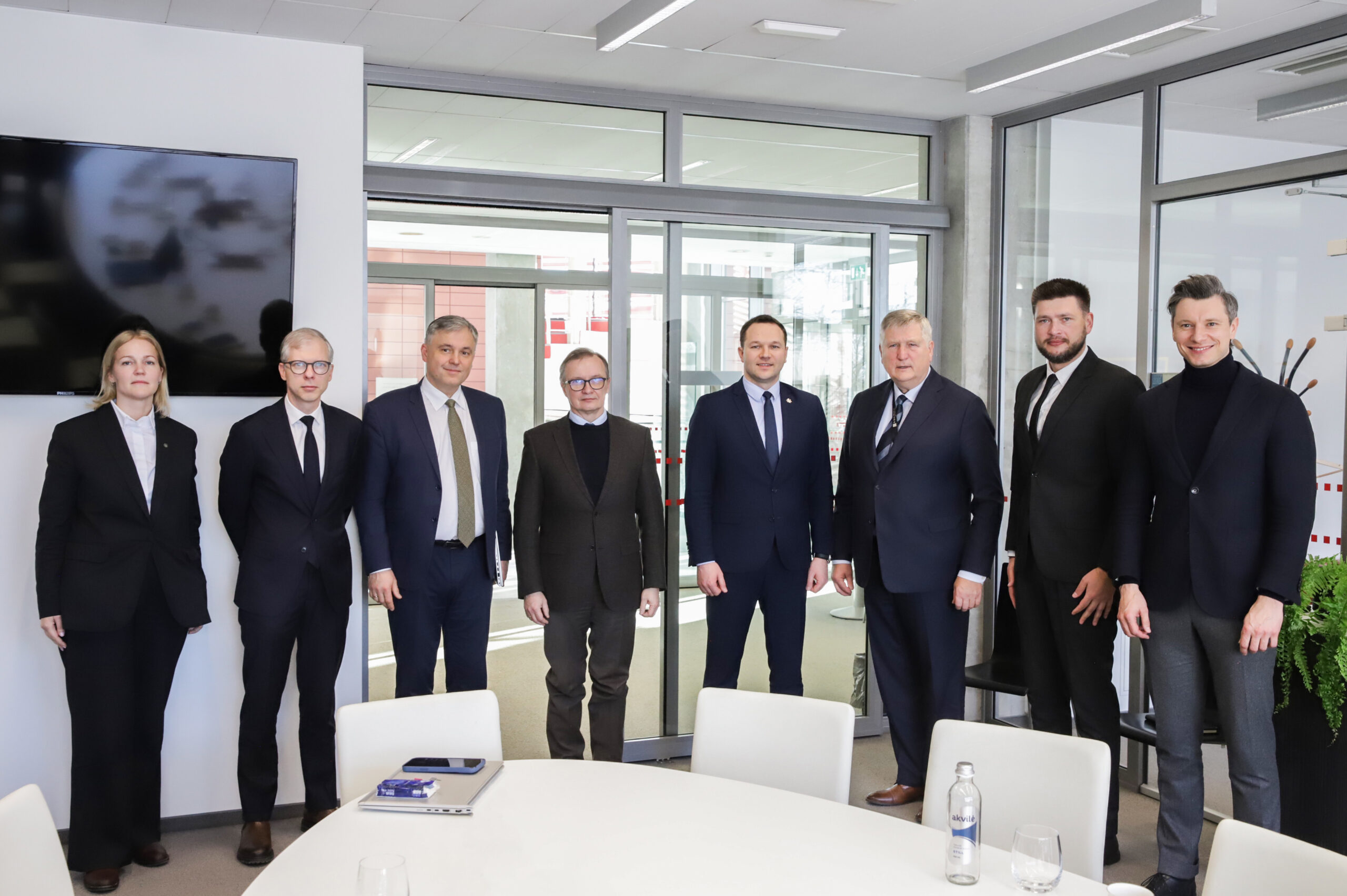
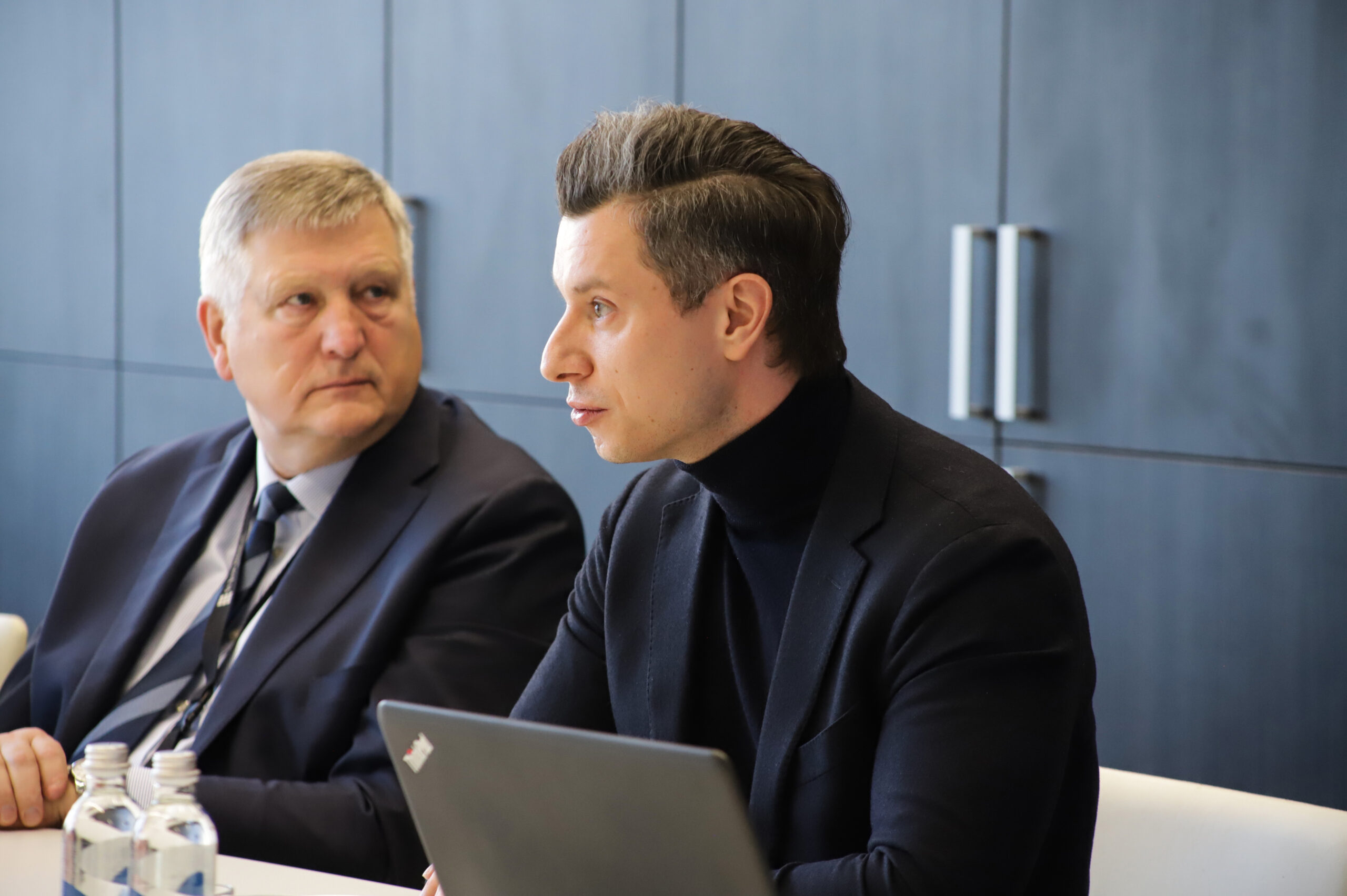
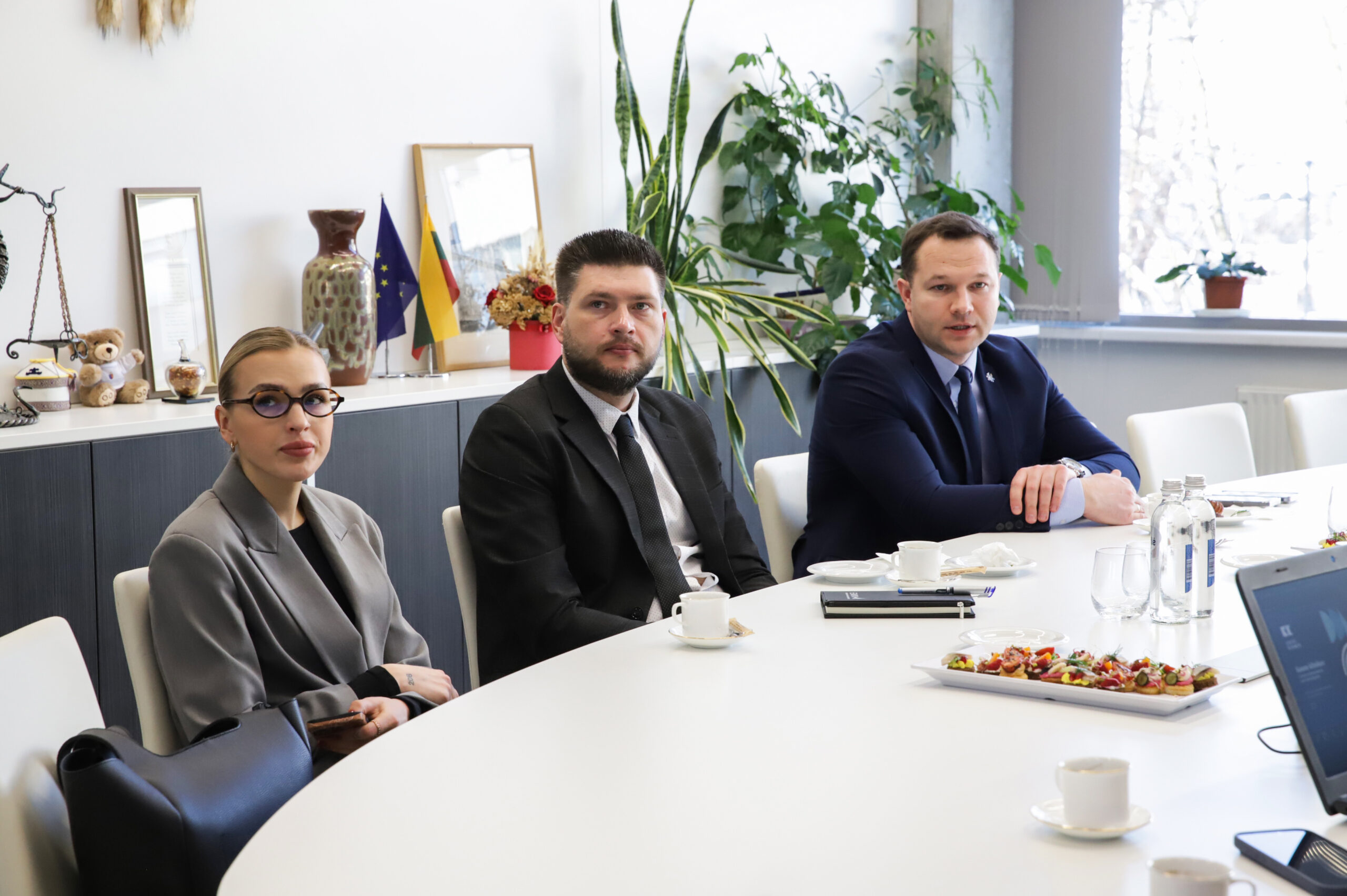
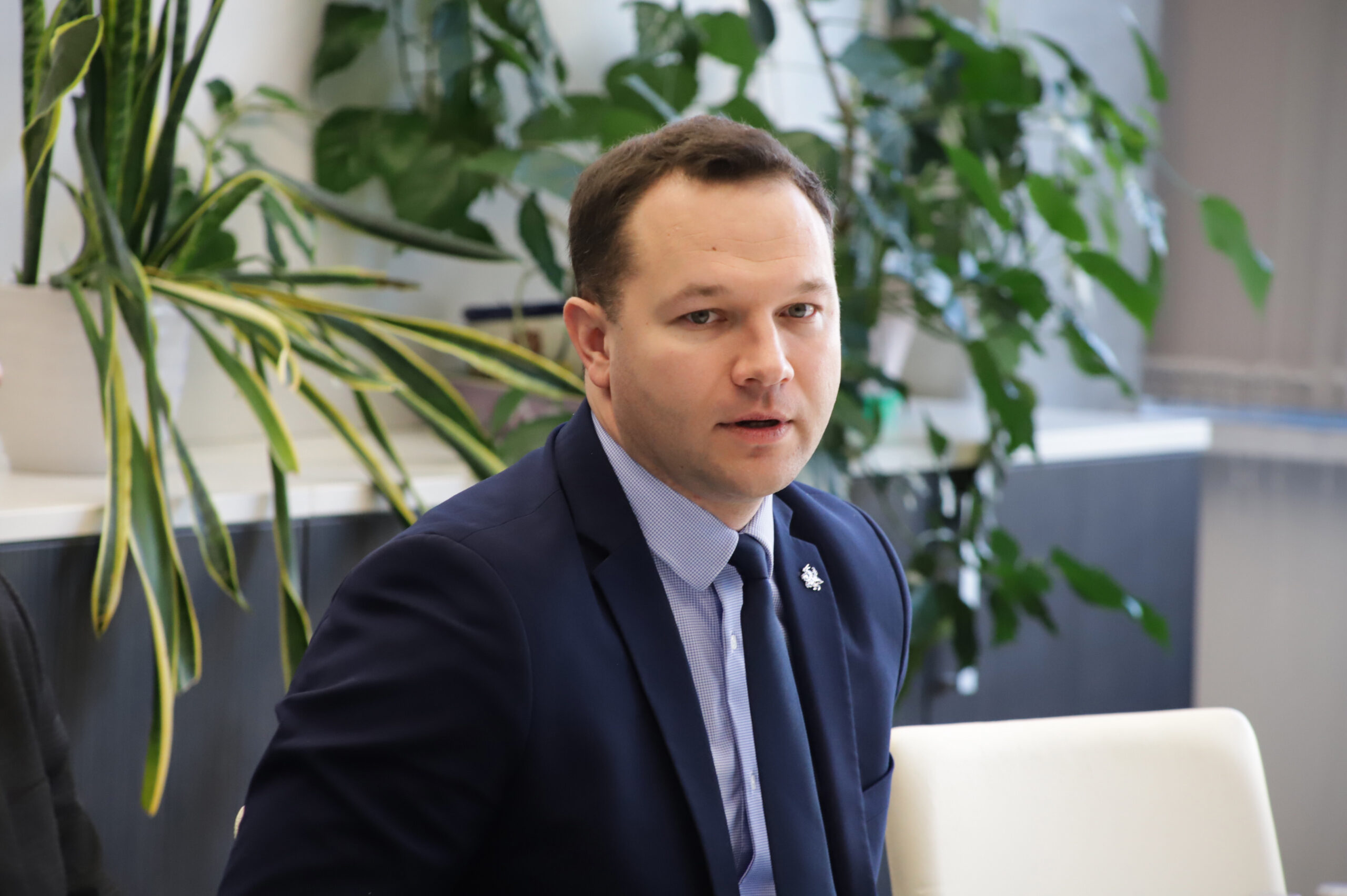
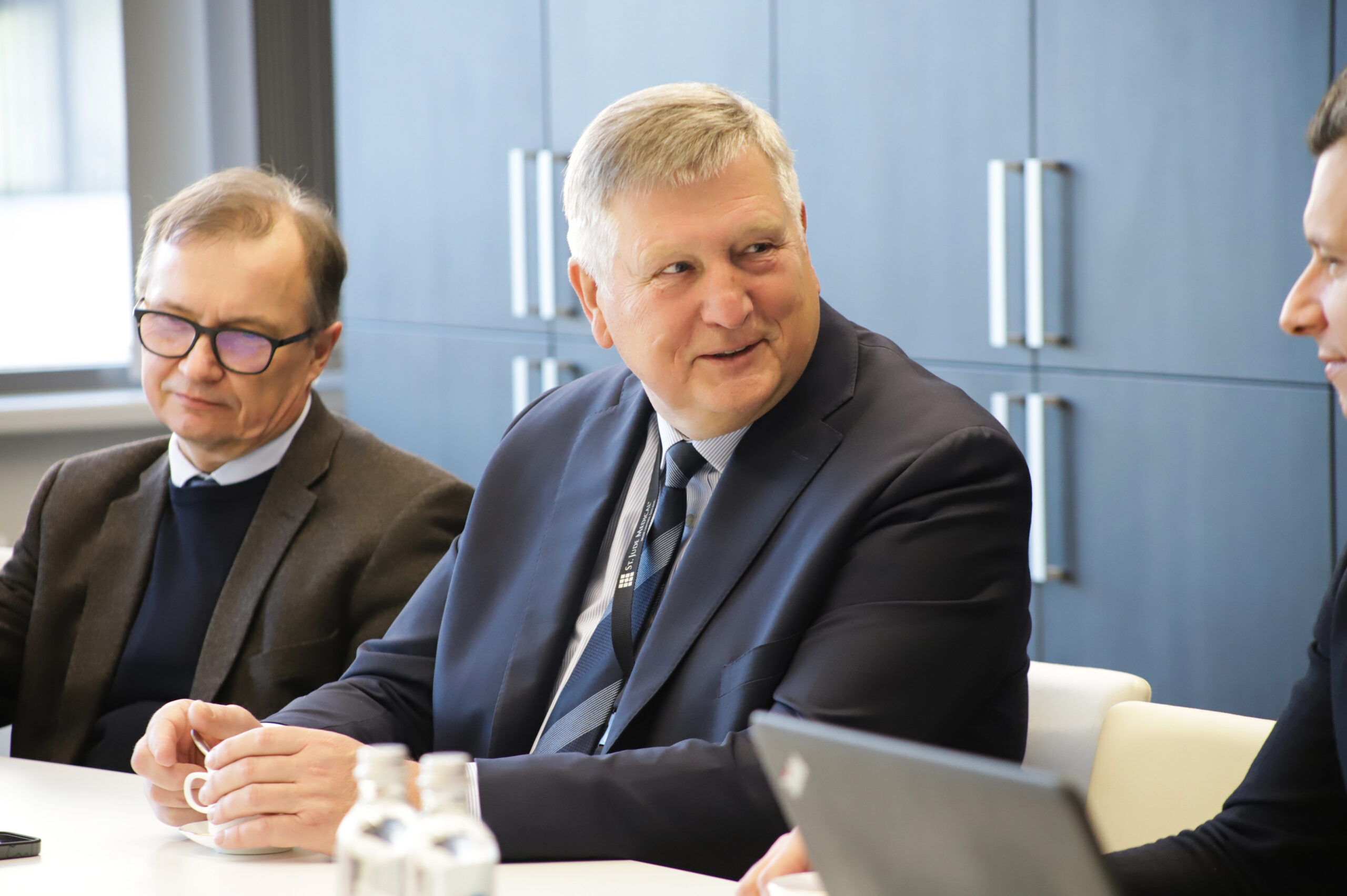
On Friday, 30 January, the Minister of Economy and Innovation of the Republic of Lithuania, Edvinas Grikšas, Deputy Minister Paulius Petrauskas and Minister’s Adviser Rugilė Augustaitytė visited the Lithuanian University of Health Sciences (LSMU).
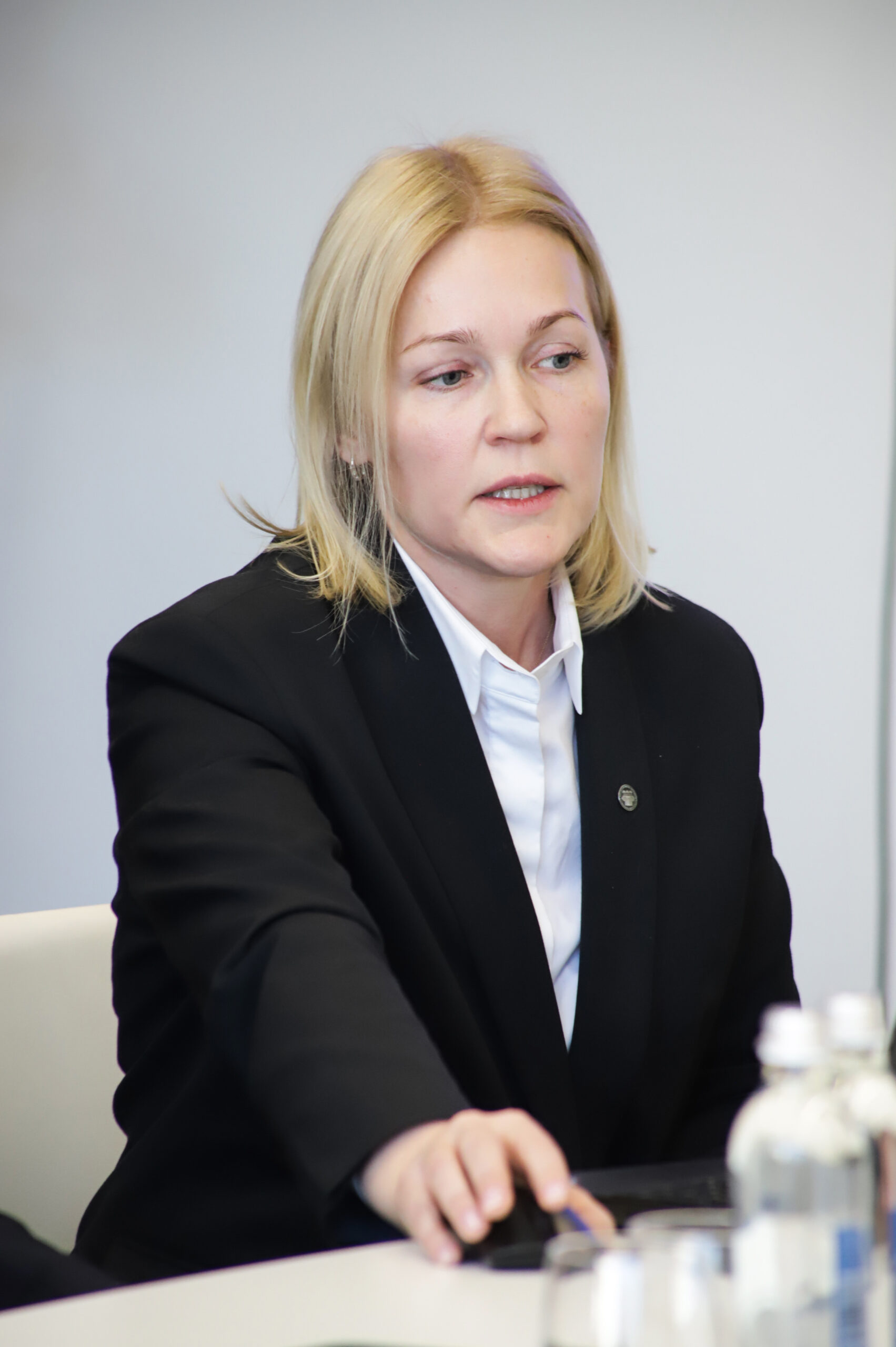
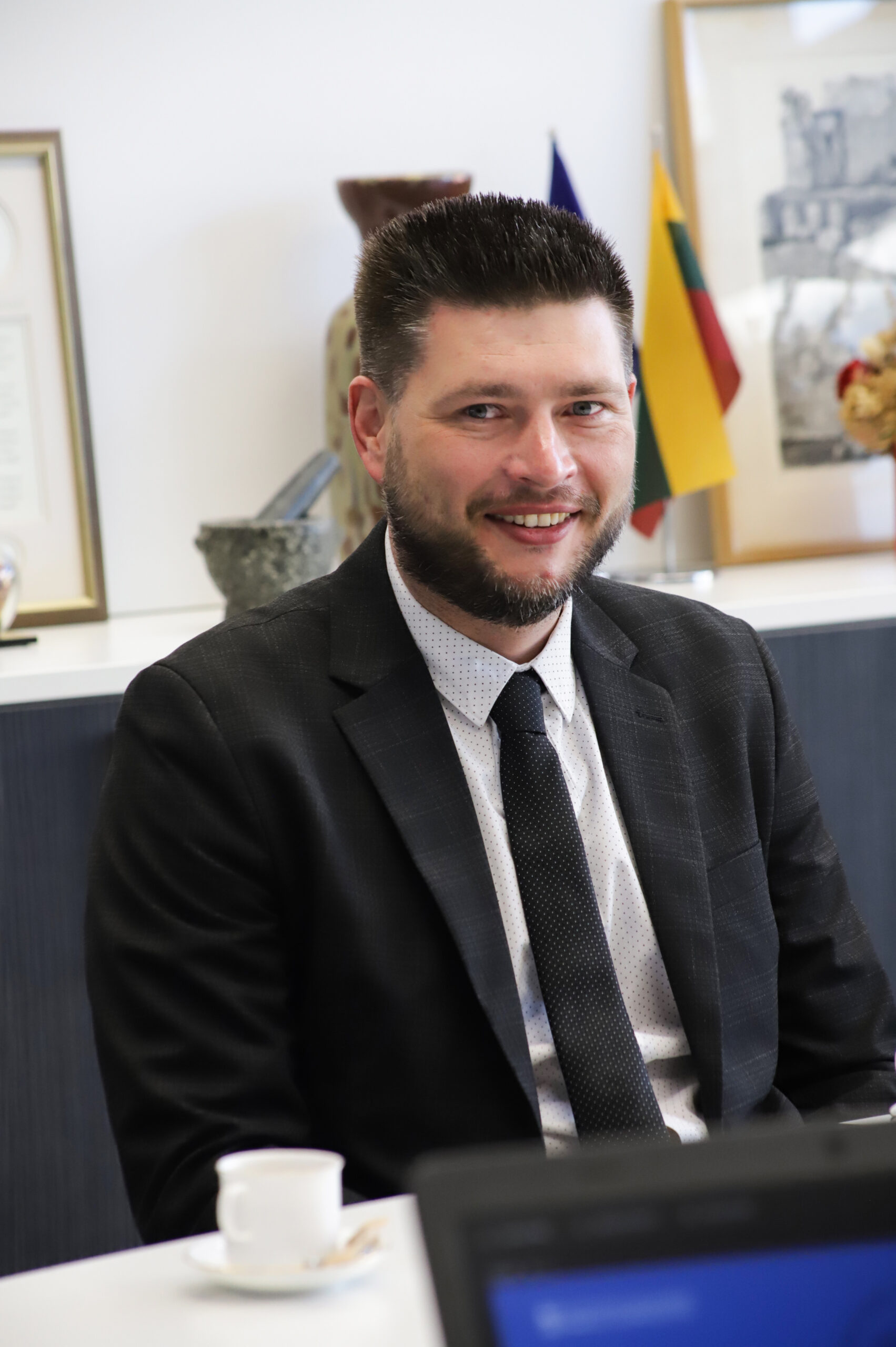
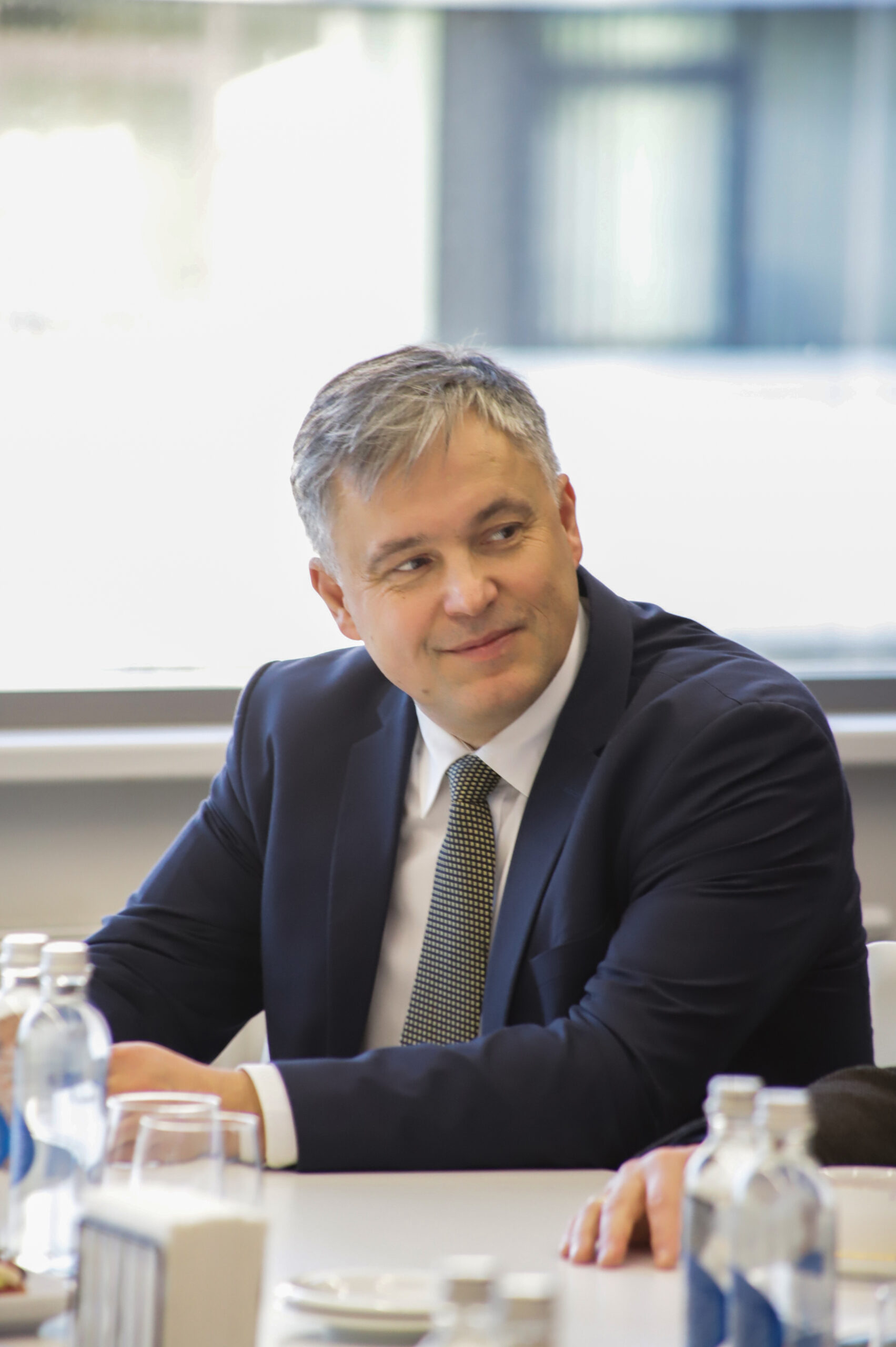
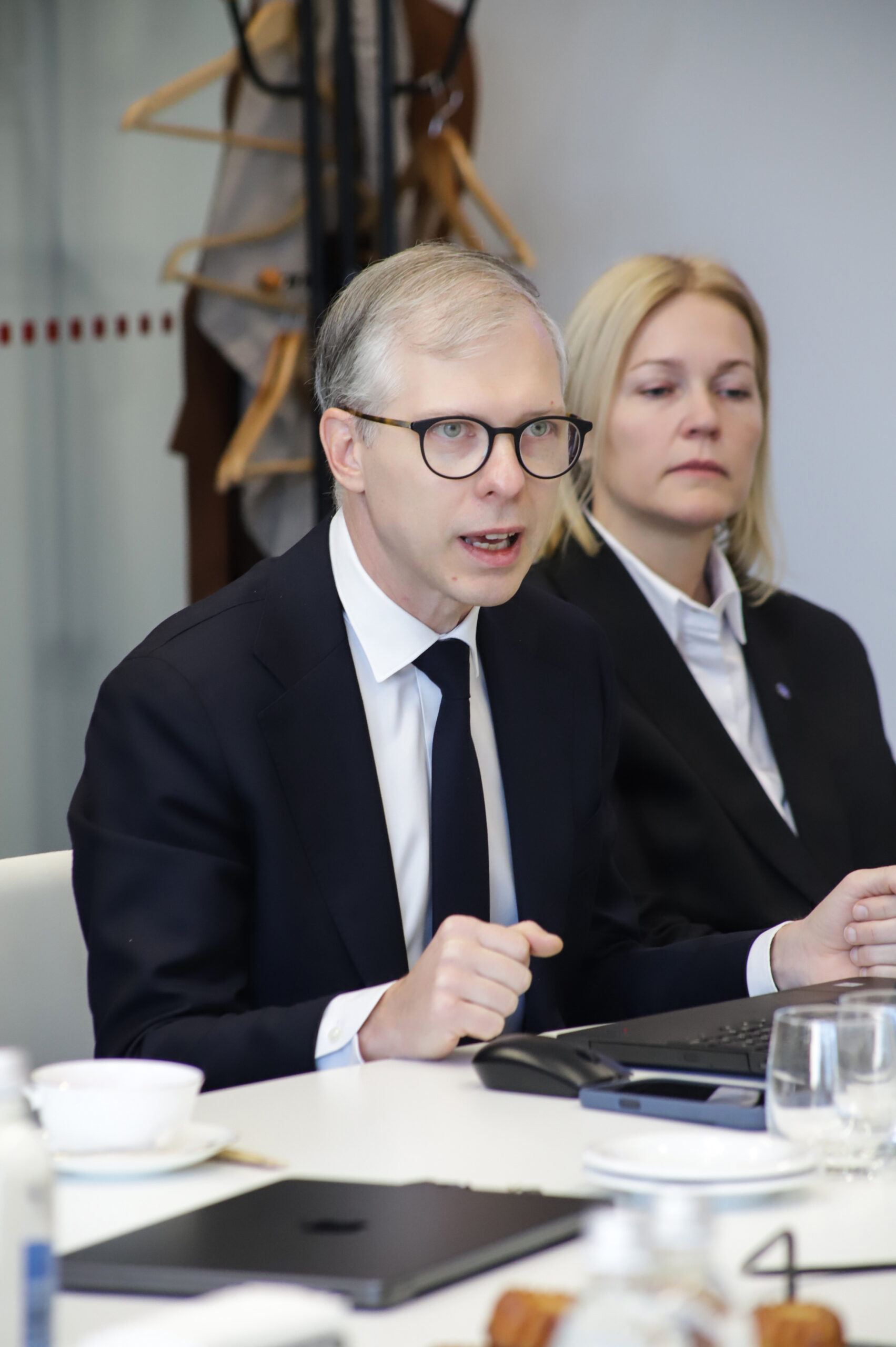
The guests were welcomed at the LSMU Centre for Advanced Pharmaceutical and Health Technologies at the Santaka Valley by Prof. Dr Rimantas Benetis, LSMU Rector; Prof. Habil. Dr Renaldas Jurkevičius, Vice-Rector for Clinical Medicine and Director General of LSMU Hospital Kauno Klinikos; Prof. Dr Juozas Kupčinsas, Vice-Rector for Research; Prof. Dr Andrius Macas, Dean of the Faculty of Medicine; Prof. Tomas Lapinskas, Director for Public Health, Science and Studies at Kauno Klinikos, and Laima Matusevičienė, Director of Administration and Finance.
This was the first visit of the Minister of Economy and Innovation to LSMU.
The guests were introduced to the activities of the Lithuanian University of Health Sciences and Kauno Klinikos, as well as the major future projects.
LSMU Rector Prof. Dr Rimantas Benetis emphasised that high-quality international science and studies at the University have deep historical roots – from the Higher Courses in 1919, the founding of the University of Lithuania in 1922, to the post-war period, when efforts were made to preserve medical studies in Kaunas.
“The University’s responsibility, high ambitions, internationalism, and perseverance seem to have been hard-wired into the organisation since those times. All key infrastructure projects of LSMU and Kauno Klinikos are extremely significant for society and the country,” emphasised the Rector.
During the meeting, the LSMU Vice-Rector for Research Prof. Dr Juozas Kupčinskas emphasised the uniqueness and potential of the University as a specialised, one of the most highly regarded universities in Lithuania, bringing together a vast community of over 30,000 qualified healthcare professionals, a leader in the field of biomedical sciences, and exceptionally well-integrated in terms of its academic, scientific, and clinical activities. Among the exceptional recent breakthroughs, the Vice-Rector mentioned the substantial European project funding attracted.
“LSMU’s priority research areas are concentrated around the strongest teams of researchers. Historically, we have very strong research areas in neuroscience and the cardiovascular system, and we are delighted with the innovations being developed by the Faculty of Pharmacy in the areas of pharmacy and biopharmacy. Research into the digestive system has made great strides, and research in the field of oncology and the advanced technologies in this field will receive particular attention in the future,” said the Vice-Rector for Research.
The team of the Minister of Economy and Innovation was also presented with our University’s major achievements in the areas of innovation and its commercialisation, scientific research, cooperation with business, and participation in international consortia. The number of patent applications submitted by LSMU researchers is growing, LSMU is a partner in a dozen spin-off companies, with some of the startups achieving impressive international recognition, and their number is expected to grow in the future. The EIT Health initiative plays an important role in the commercialisation of innovations. The university is joining promising international consortia developing neurotechnology, artificial intelligence and robotics systems, and an international centre of excellence in the field of the microbiome will be expanded over the next few years.
Laima Matusevičienė, Director of Administration and Finance, presented the most relevant LSMU infrastructure projects to the guests: the science and study bases of the Faculty of Odontology and the Faculty of Medicine, the Proton Therapy Centre, the Animal Hospital, and the Veterinary Academy’s training and experimental base infrastructure development projects.
“The infrastructure we plan to create would contribute to economic development, job creation, the development of the Kaunas region, and the creation of added value. The university’s goal is to reach a sustainable and long-term agreement with state institutions so that we can fully implement these projects,” emphasised L. Matusevičienė.
In the discussion of the Ministry’s ambition, the Minister of Economy and Innovation Edvinas Grikšas noted that Lithuania is among the Eastern European countries that are “growing” start-ups the fastest, but we still have much to do in the commercialisation of scientific innovations.
According to Deputy Minister Paulius Petrauskas, the development of science and innovation in Lithuania has so far followed the classic Western European model – gradual and rather low-paced, while in many parts of the world these processes are being accelerated.
“I believe that it is possible to create conditions for a breakthrough and a quick start in Lithuania, in particular as we have already invested in infrastructure and we have specialists,” said the Deputy Minister.
During the meeting, there was extensive discussion on innovation, the commercialisation of scientific research, attracting talent to the University and Lithuania, and sources of funding. Later, the ministry leaders visited strategically important facilities at Kauno Klinikos – the Human Biological Resource Centre (Biobank) and the Nuclear Medicine Research Centre.
At the end of the visit, Minister E. Grikšas promised that this first visit to LSMU would certainly not be the last.
 View all photos