
LSMU Delegation Visit to Kiel University: From Longstanding Partnership to Microbiome & Precision Medicine Centre and Strategic Cooperation
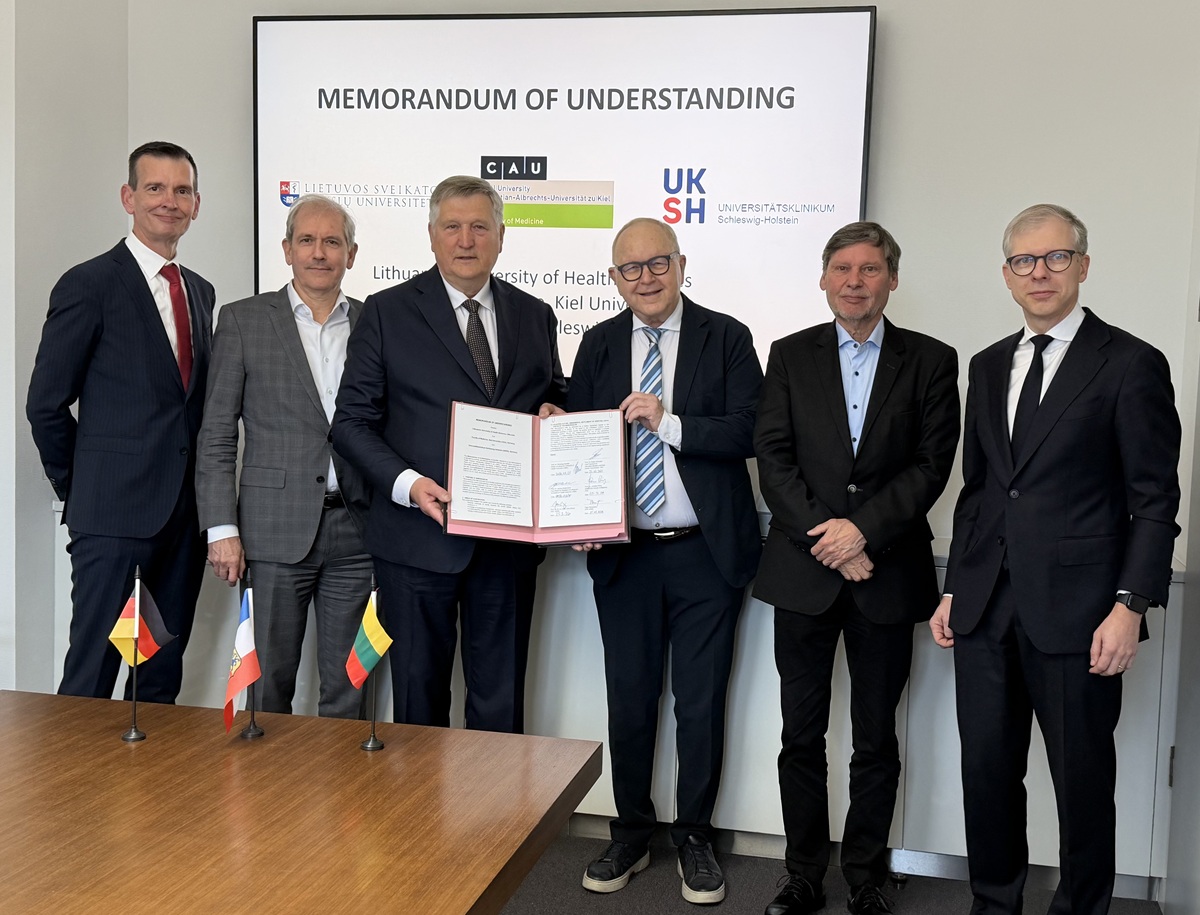
On 24–25 March 2026, LSMU Rector Prof. R. Benetis, Vice-Rector for Research Prof. J. Kupčinskas, and Director of the Institute for Digestive Research Prof. Jurgita Skiecevienė visited Kiel University in Germany. During the meeting, a strategic cooperation agreement was signed between LSMU and Kiel University, opening up new opportunities for further collaboration between the institutions.
The collaboration between the Institute for Digestive Research (VSTI) at the Lithuanian University of Health Sciences (LSMU) and the Institute of Clinical and Molecular Biology (IKMB) at Kiel University extends over more than two decades. A strong partnership formed during this period, encompassing joint research projects, researcher exchanges, the implementation of advanced technologies, and active participation in international microbiome research.
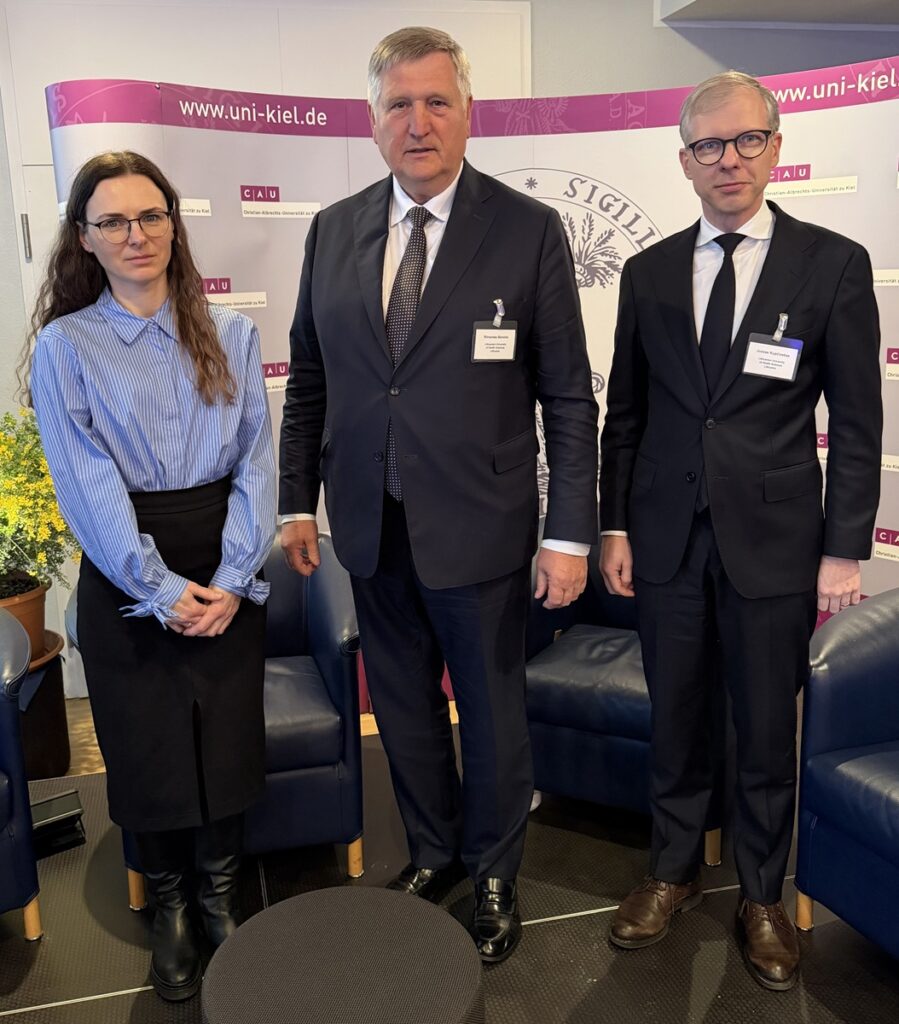
This collaboration has become not only the foundation for academic ties but also a platform for new strategic initiatives. A key result of this partnership is the International Centre for Microbiome and Precision Medicine, developed at the LSMU Institute for Digestive Research in partnership with Kiel University, enabled by a competitive EUR 8.0 million grant from the Research Council of Lithuania for the creation of international centres of excellence.
In this context, the visit of the LSMU delegation to Kiel University on 23–26 March 2026 was a purposeful step toward bringing the partnership to a higher, strategically coordinated level. During the visit, considerable attention was devoted not only to reviewing ongoing joint activities but also to identifying specific directions for further development.
The agenda of the visit included meetings with the leadership and researchers of the Faculty of Medicine, as well as familiarisation with advanced research platforms. During the visit to the Centre for Molecular Life Sciences (ZMB), the delegation was presented with its activities in genomics, metabolomics, bioinformatics, and biobanking, emphasising the importance of integrated data and infrastructure in modern biomedical research.
Significant attention was also given to the development of experimental models and microbiome research. The discussions included opportunities to strengthen joint work in microbiome research by integrating clinical data, omics technologies, and advanced models, including gnotobiotic systems.
Another important part of the visit took place at the University Hospital Schleswig-Holstein (UKSH) and the new state-of-the-art Quincke Research Centre, where the delegation was introduced to the advanced solutions for the creation and organisation of scientific research infrastructure. This experience is particularly relevant for LSMU as it plans the development of its scientific infrastructure and aims to ensure the effective integration of science, studies, and clinical activities.
During the visit, specific mechanisms for strengthening cooperation were also discussed, including a visiting professor scheme, joint master’s programmes, researcher mobility, and the expansion of joint initiatives. These mechanisms are considered essential for achieving long-term, structured, and internationally competitive cooperation.
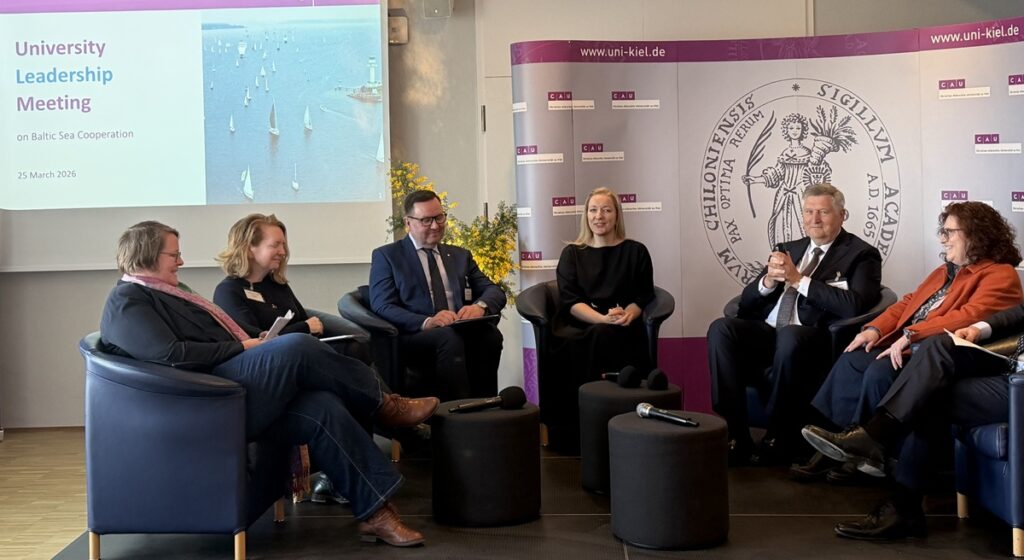
The visit of the LSMU delegation to Kiel University marks a consistent transition from a long-term successful partnership to a broader, strategically coordinated cooperation model. This step is expected to strengthen the University’s international visibility, create opportunities for new high-level research projects, and contribute to the development of innovative solutions in the biomedical field.