Visit by the President of the CERN Council to LSMU: A Focus on Scientific Potential and Medical Progress
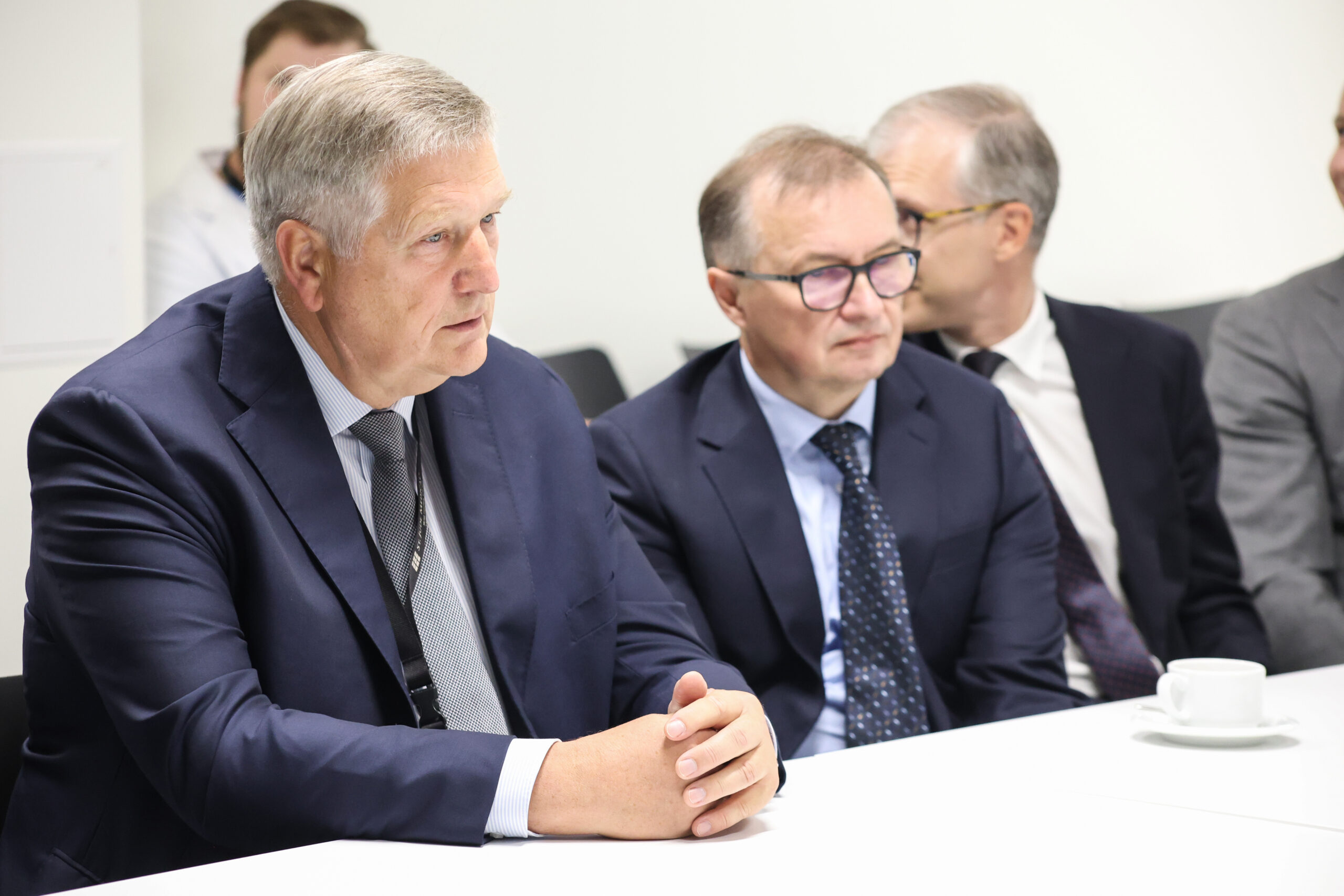
On 19 October, Prof. Costas Fountas, President of the CERN Council, who was on a visit to Lithuania, also visited the Lithuanian University of Health Sciences (LSMU) and the Hospital of the Lithuanian University of Health Sciences Kauno Klinikos. During a meeting with the University and hospital management, researchers and students, the nuclear medicine infrastructure and ongoing research were presented, and prospects for future cooperation with CERN were discussed.
The visit took place as Lithuania seeks full membership of CERN and provided an opportunity to showcase the scientific expertise and infrastructure of LSMU and Kauno Klinikos, which enable the application of advances in physics, engineering and medicine to the diagnosis and treatment of diseases.
Accompanying Prof. C. Fountas were Prof. Dr Saulė Mačiukaitė-Žvinienė, Chair of the Lithuanian Education Council, and Ambassador Rytis Paulauskas, Lithuania’s Permanent Representative to the United Nations Office and other international organisations in Geneva.
The guests were welcomed by the Rector of LSMU, Prof. Dr Rimantas Benetis; the Director General of Kauno Klinikos, Prof. Habil. Dr Renaldas Jurkevičius; the Vice-Rector for Research at LSMU, Prof. Dr Juozas Kupčinskas; the Director for Public Health, Science and Studies at Kauno Klinikos, Prof. Dr Tomas Lapinskas; the Head of the Nuclear Medicine Research Centre, Prof. Dr Donatas Vajauskas; the Head of the Department of Oncology and Haematology, Prof. Dr Elona Juozaitytė; Associate Professor Dr Erika Korobeinikova of the same department; and medical physicists Evelina Jaselskė, Mindaugas Silickas and Laurynas Gilys, who are involved in CERN-related research.
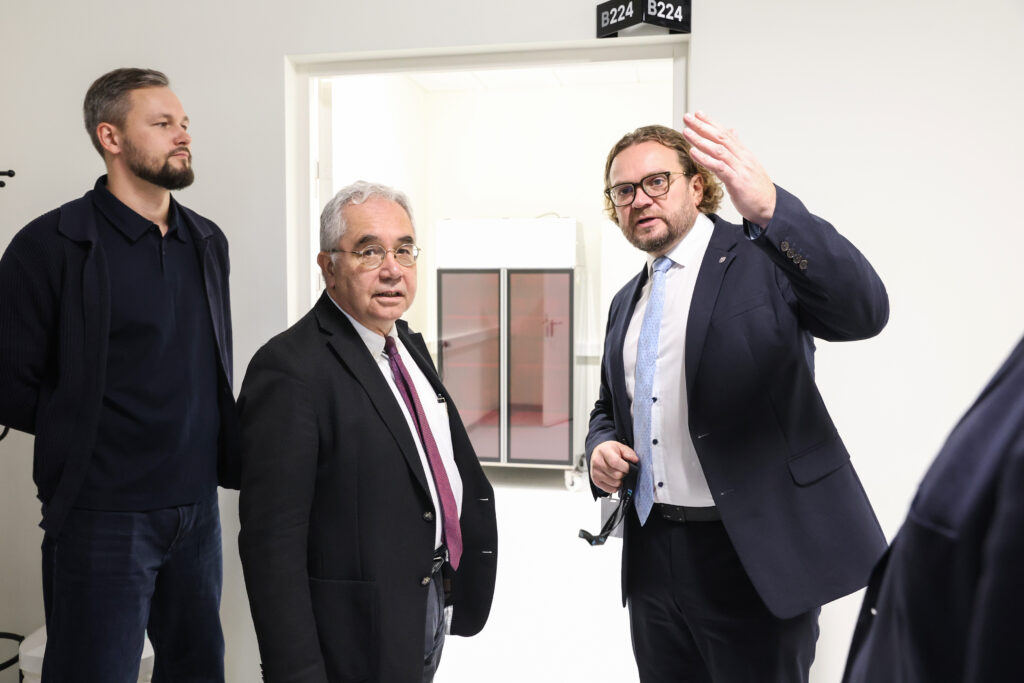
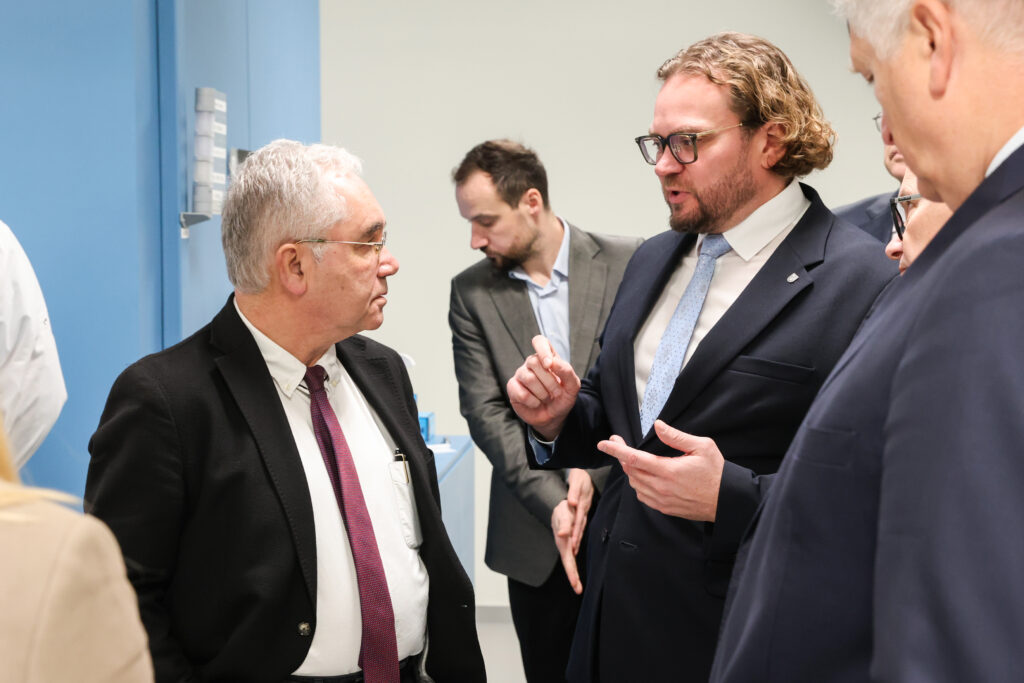
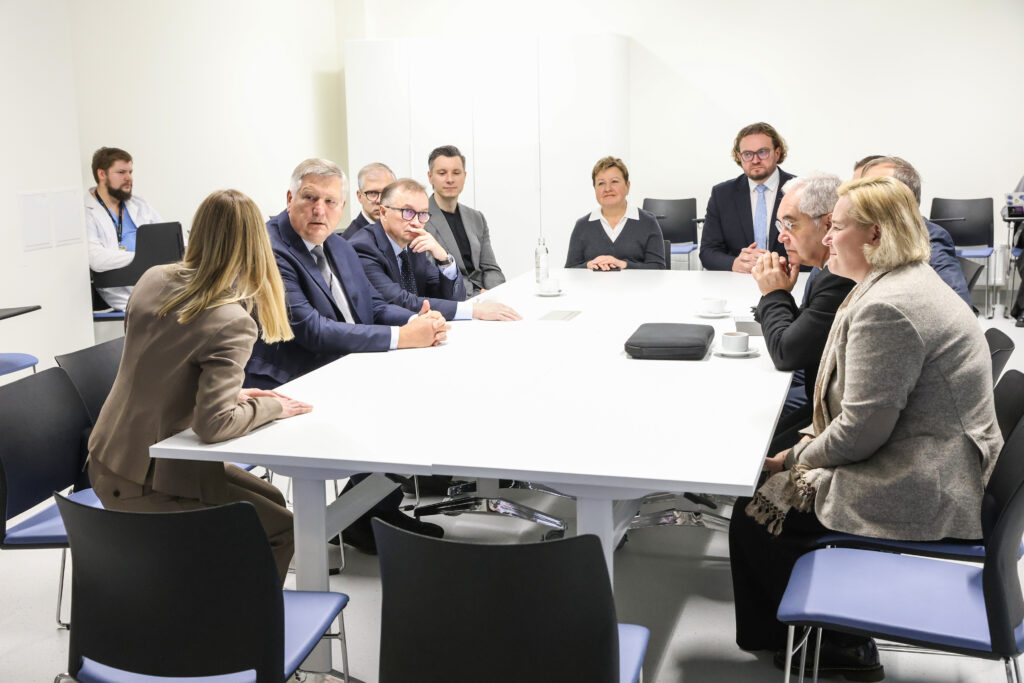
The guests were given a tour of the Nuclear Medicine Research Centre at Kauno Klinikos and took part in a discussion with representatives of the University and hospital management, as well as researchers involved in CERN-related research.
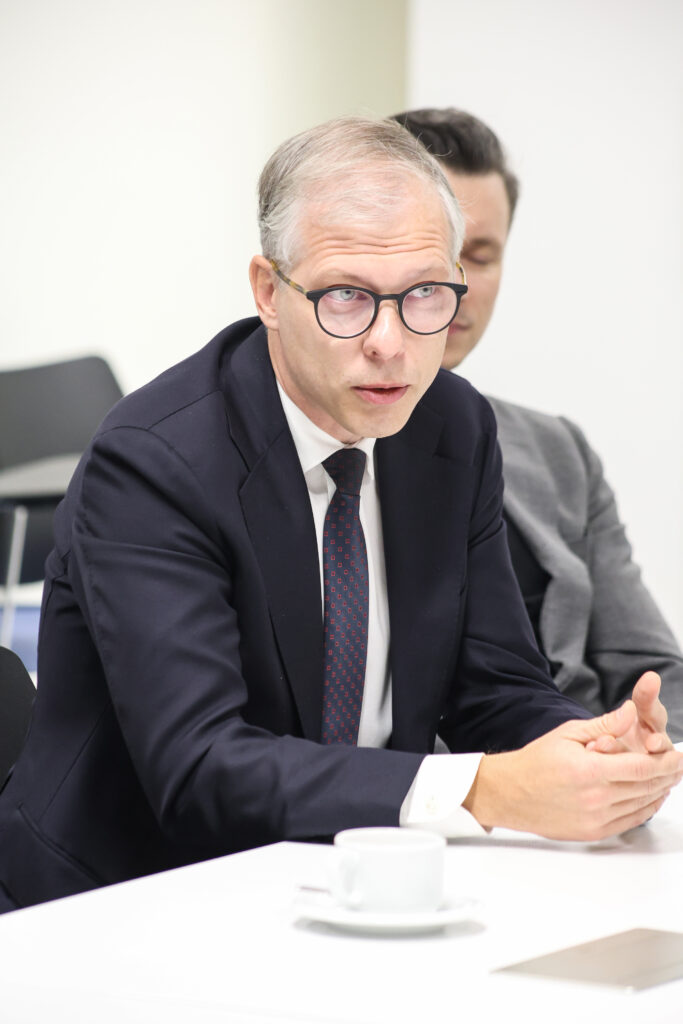
Following a presentation by Associate Professor Dr Erika Korobeinikova of the Department of Oncology and Haematology on the ongoing projects at LSMU and Kauno Klinikos, the ensuing discussion focused on the prospects for research into particle therapy, nuclear medicine, medical radioisotopes and radiobiology. These fields are linked by a common goal – to utilise advanced technologies for more accurate diagnosis, more effective treatment and new scientific solutions.
A partnership between physics and medicine – for the benefit of patients
“In the field of nuclear medicine research, the University’s researchers and specialist doctors at Kauno Klinikos have achieved internationally recognised results. This particular field, which has been developing for 30 years, could be claimed to be one of the strongest in the Baltic states. The strategic infrastructure – the Nuclear Medicine Research Centre, equipped with a cyclotron – has opened up broader diagnostic and treatment possibilities. Building on the experience we have accumulated, we are developing new research projects and discoveries that will benefit public health.
“We aim for LSMU to be positioned on the international stage not only as a centre for education, but first and foremost as a centre for cutting-edge research,” emphasised Prof. Dr Rimantas Benetis, Rector of LSMU.
“As Lithuania seeks full membership of CERN, it is important to demonstrate the country’s scientific and technological potential and existing expertise. Kauno Klinikos has accumulated significant experience in the field of nuclear medicine. We operate modern infrastructure and have a team of highly qualified specialists. We believe that closer cooperation with CERN could become a significant milestone in the development of nuclear medicine at Kauno Klinikos and the Lithuanian University of Health Sciences,” said Prof. Habil. Dr R. Jurkevičius.
According to the Director General, such cooperation would open up wider opportunities for training placement for specialists, the exchange of international expertise, joint research and the implementation of advanced technologies.
“It is important to us that international cooperation eventually translates into actual results in scientific and medical progress. We aim to ensure that the latest technologies and scientific achievements are applied in clinical practice, opening up even better diagnostic and treatment options for patients at Kauno Klinikos,” emphasised Prof. Habil. Dr R. Jurkevičius.
“CERN is an excellent example of how fundamental scientific research findings turn into technologies that change our lives. At LSMU, we aim not only to be users of these technologies, but also partners in their development. We see great potential for collaboration in particle therapy, nuclear medicine and other fields where physics, engineering and medicine intersect. This visit is an opportunity to strengthen our collaboration and, together, contribute to the development of future medical technologies,” said Assoc. Prof. Dr E. Korobeinikova.
A key component of this partnership’s infrastructure is the Nuclear Medicine Research Centre, which was launched in 2024. It houses a cyclotron and a laboratory for the production and quality control of radiopharmaceuticals. This infrastructure enables the on-site production of short-lived radionuclides required for diagnostics and the advancement of biomedical research.
During the meeting with the President of the CERN Council, the opportunities for LSMU and Kauno Klinikos to develop nuclear medicine, radiopharmacy and advanced cancer treatment in collaboration with CERN were discussed. It was emphasised that the operational cyclotron, the production of radiopharmaceuticals, the biobank and the expanding pre-clinical research provide a solid foundation for the further integration of research and clinical practice.
According to Prof. Donatas Vajauskas, Head of the Nuclear Medicine Research Centre, there are plans to expand the range of radiopharmaceuticals, set up a laboratory for the production of therapeutic radiopharmaceuticals and strengthen research into theranostics. Collaboration with the CERN MEDICIS group would open up opportunities to use radioisotopes that are more difficult to access in research.
Meeting participants welcomed the progress made over the past decade, whilst emphasising the need to invest in specialists, international partnerships and research funding. The idea of a Baltic Centre for Advanced Particle Therapy, linked to the HELIX compact helium and light-ion synchrotron being developed by CERN, was brought up during the visit.
CERN and Lithuania’s membership
The European Organisation for Nuclear Research (CERN) is an international organisation founded in 1954, with its laboratory situated on the border between Switzerland and France, near Geneva. Here, particle accelerators and detectors are used to study the fundamental structure of matter and the forces governing it. The technologies developed for this research are also applied in medicine, information technology and other fields.
Lithuania became an associate member of CERN in 2018. During this period, the country’s scientists, PhD students and undergraduates have become involved in the organisation’s activities. Full membership would grant Lithuania the right to participate in CERN’s strategic decision-making, expand career opportunities for the country’s scientists and early-career professionals, and allow Lithuanian high-tech companies to participate without restriction in the organisation’s tendering processes.
Lithuania’s aspiration to become a full member of CERN is included in the official programme of the 21st Government.