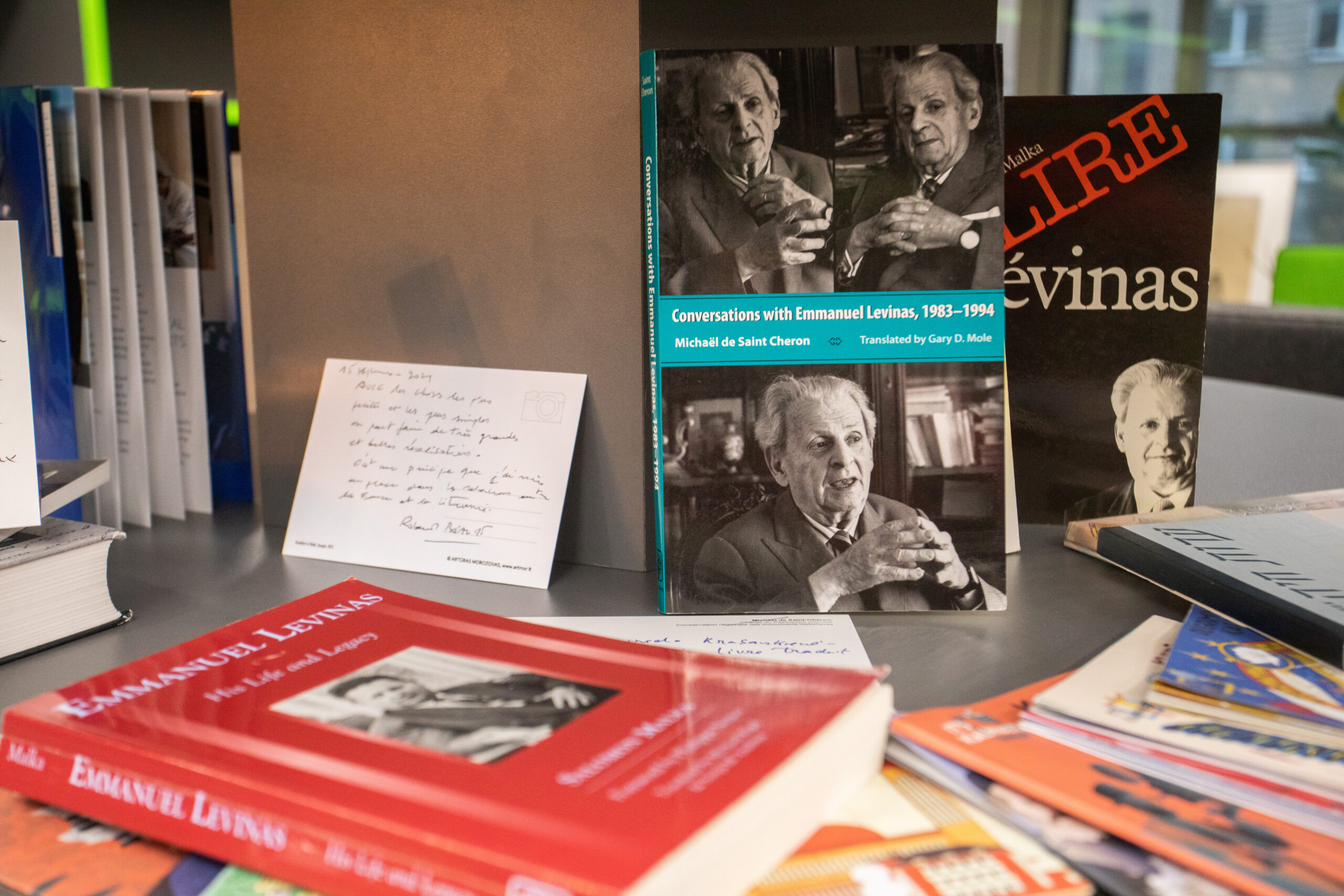
Today, Emmanuel Levinas is one of the most widely recognised figures in twentieth-century philosophy worldwide. Yet in Kaunas – the city where he was born and grew up – his story is still not as widely known. He spent his childhood and youth here before leaving Kaunas in 1923 to study in Strasbourg. He later lived and worked in France, in Paris, and became one of the most influential thinkers of the 20th century.
The historical experience of the Holocaust is inseparable from Levinas’ philosophy and one of its fundamental ideas: ethics is first philosophy, and responsibility for the other person precedes any theory.
The decision to name the LSMU Centre for Culture and Conferences after Emmanuel Levinas was no coincidence. It is not only a tribute to a world-renowned philosopher born in Kaunas, but also a statement of values. Medicine is concerned with human health and life, while Levinas’ philosophy poses a fundamental question: how do we encounter the Other, and what responsibility do we assume for them?
In healthcare, this question takes on particular significance: ethical responsibility precedes any clinical decision, and the patient is, first and foremost, a human being.
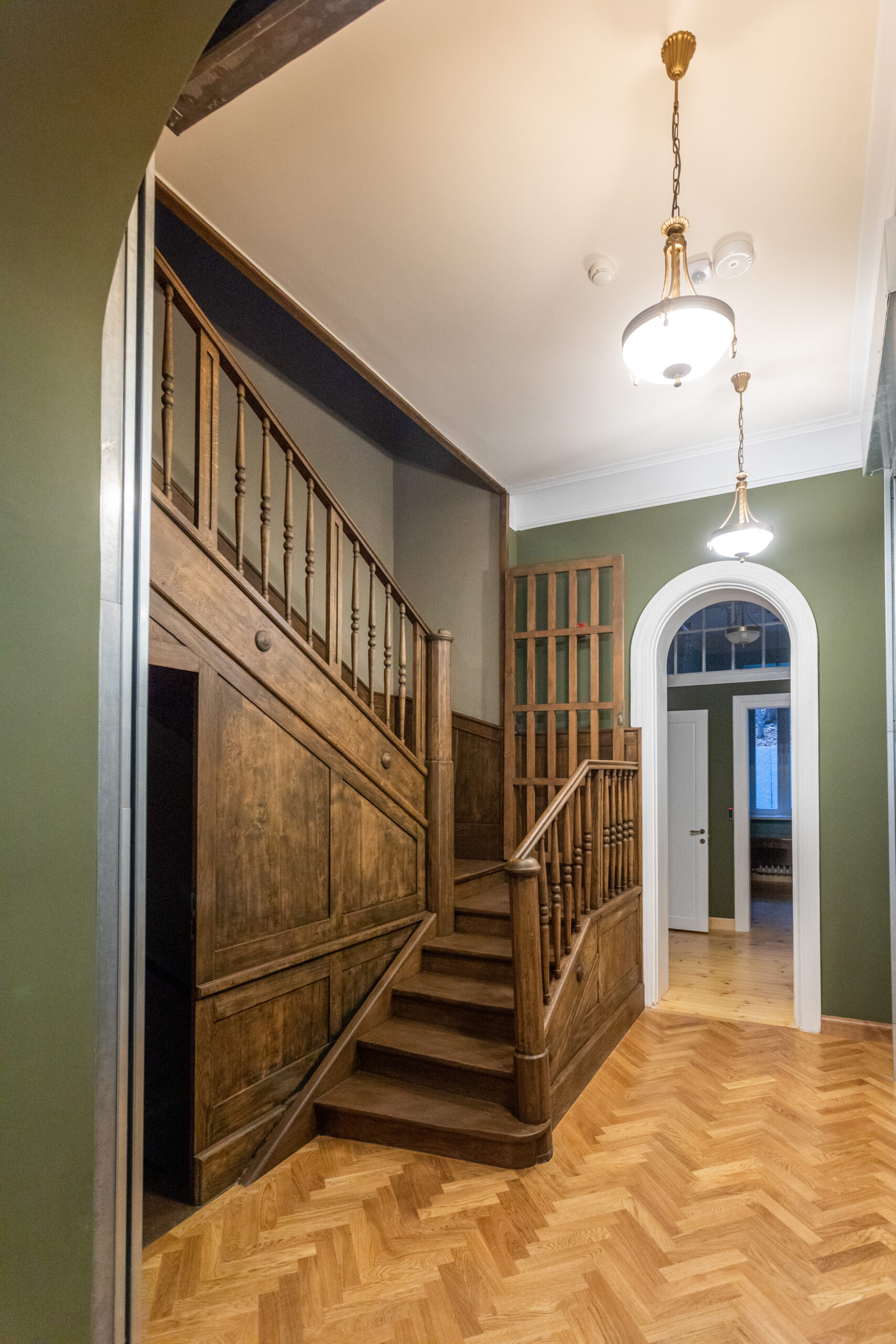
Housed in an early 20th-century modernist building designed by Lithuania’s renowned architect Vytautas Landsbergis-Žemkalnis, the Centre is a remarkable example of the interplay between architecture and philosophy. Two distinct histories come together here to form a single narrative: the architecture of the building speaks of its time and its creator, while the philosophy of Emmanuel Levinas speaks of the human being, our relationship with the Other, and responsibility.
Carefully restored and given a new lease of life, the historic spaces are open to visitors by prior arrangement. The Centre is both a physical and cultural space that invites people to meet, interact and explore questions that remain relevant to everyone working in medicine – and, indeed, to us all: what kind of medicine are we creating, what kind of relationship with the patient do we choose, and what responsibility do we assume when we encounter the Other?