A Pharmacist’s Journey at LSMU: from Consultation to Innovation
The profession of a pharmacist, held in high regard for centuries, has rapidly adapted to technological change.
“The future starts now!” joyfully proclaim the researchers at the Faculty of Pharmacy of the Lithuanian University of Health Sciences as they switch on a 3D drug printer. In LSMU laboratories, this device is already being used to develop remarkable innovations. For instance, instead of taking a handful of separate medicines, researchers are exploring ways to “print” several active substances into a single tablet for them to be subsequently released at different times.
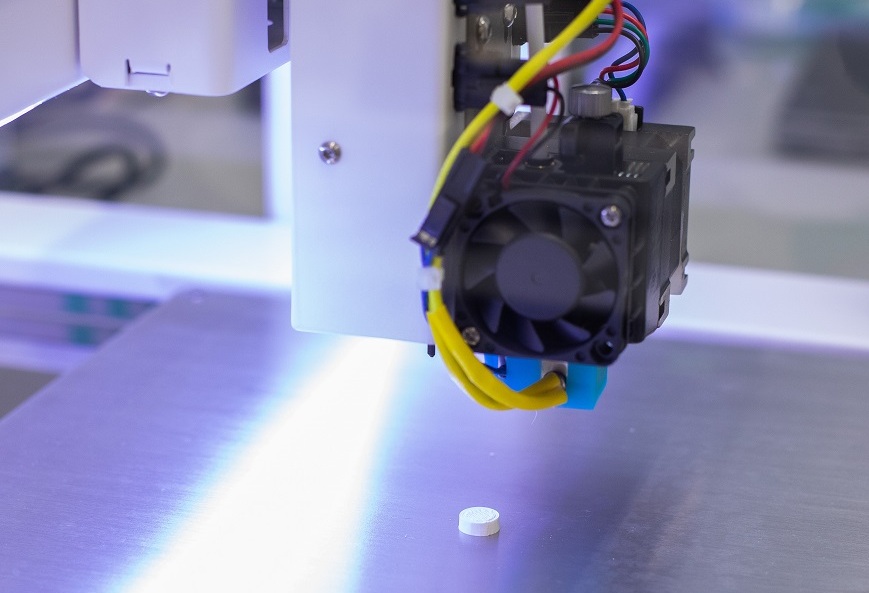
Quite possibly, in the near future such printers will be used in pharmacies rather than being confined exclusively in laboratories, and pharmaceutical specialists will be able to print personalised medicines prescribed by a doctor for individual patients.
Tablets, pills, and capsules are the most widely known forms of medicine among the general public. However, in modern pharmacy, the range of forms is much broader and includes powders, solutions, suspensions, ointments, creams, suppositories, mouthwashes, herbal mixtures, gels, tinctures, lotions, foams, films – all of which can now be tailored to meet the specific needs of each patient.
Better still, generous scholarships are available to students at the LSMU Faculty of Pharmacy each year for proposing scientifically sound and practically applicable ideas. For those dreaming of discovering the next breakthrough medicine, the opportunities are extensive. This year alone, student projects have included treatments for infected wounds, a topical stick to promote better sleep, a smart micronutrient monitoring app, 3D-printed capsules to support prostate cancer treatment, anti-nausea nanofiber, and many other innovative solutions.
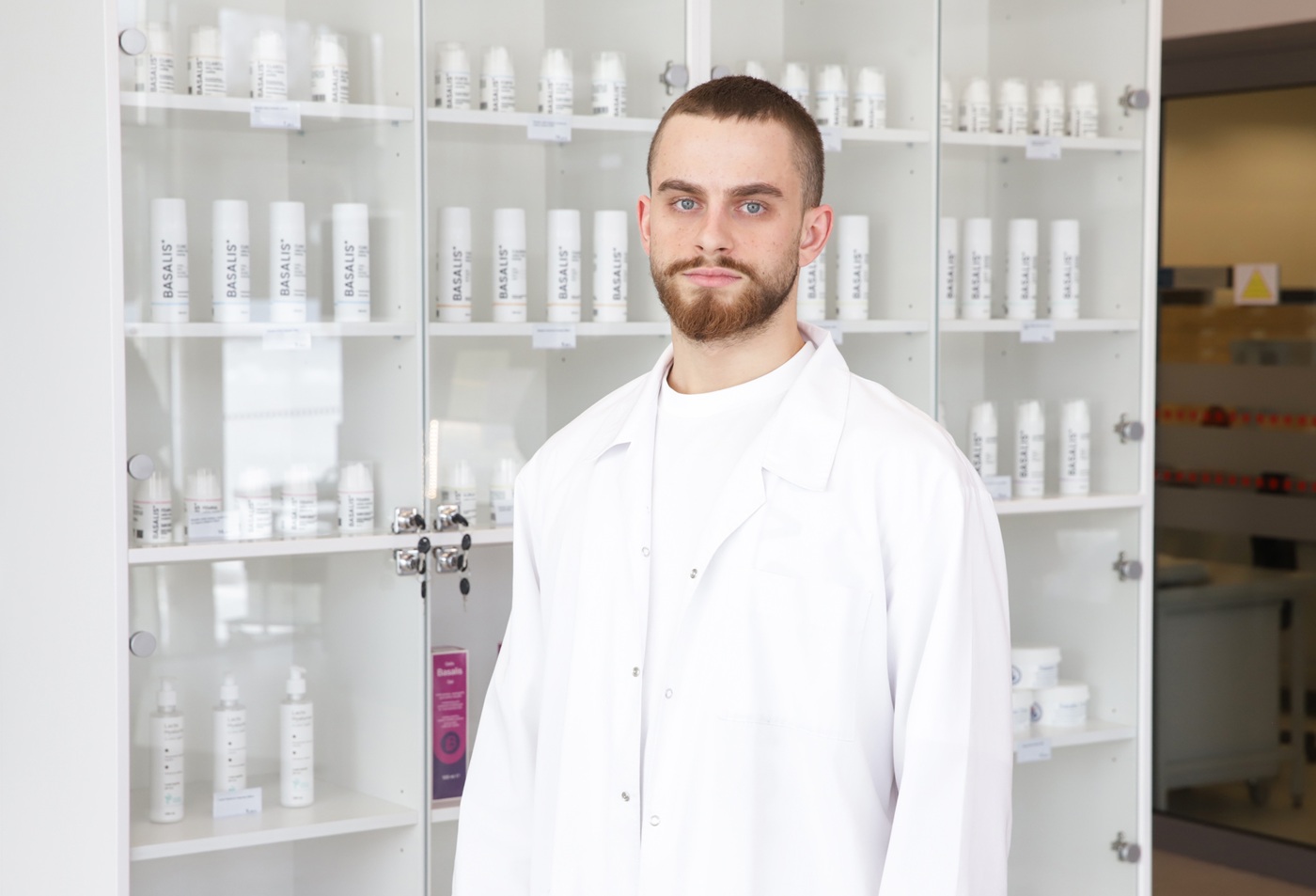
Tomas Maštaras, one of LSMU’s graduates, is a case in point. Today, he not only provides patient advice but is also involved in pharmaceutical development. His studies in Pharmacy have opened far broader opportunities than simply working in a pharmacy.
Career choice driven by interest in science
Even at school, T. Maštaras excelled in biology and chemistry, which strengthened his decision to link his future with the healthcare sector. Having chosen Pharmacy at the Lithuanian University of Health Sciences (LSMU), he has no regrets: motivated fellow students and the overall study environment at LSMU helped him overcome challenges.
“At University, I met fellow students whom I now call friends. They made those five years of study both easier and more enjoyable. Although some subjects turned out harder for me to grasp, sharing knowledge, and supporting one another made even the most complex topics manageable,” he recalls.
The beginning of a professional journey
Early opportunities for placements at LSMU help students discover the area of the profession that appeals to them most.
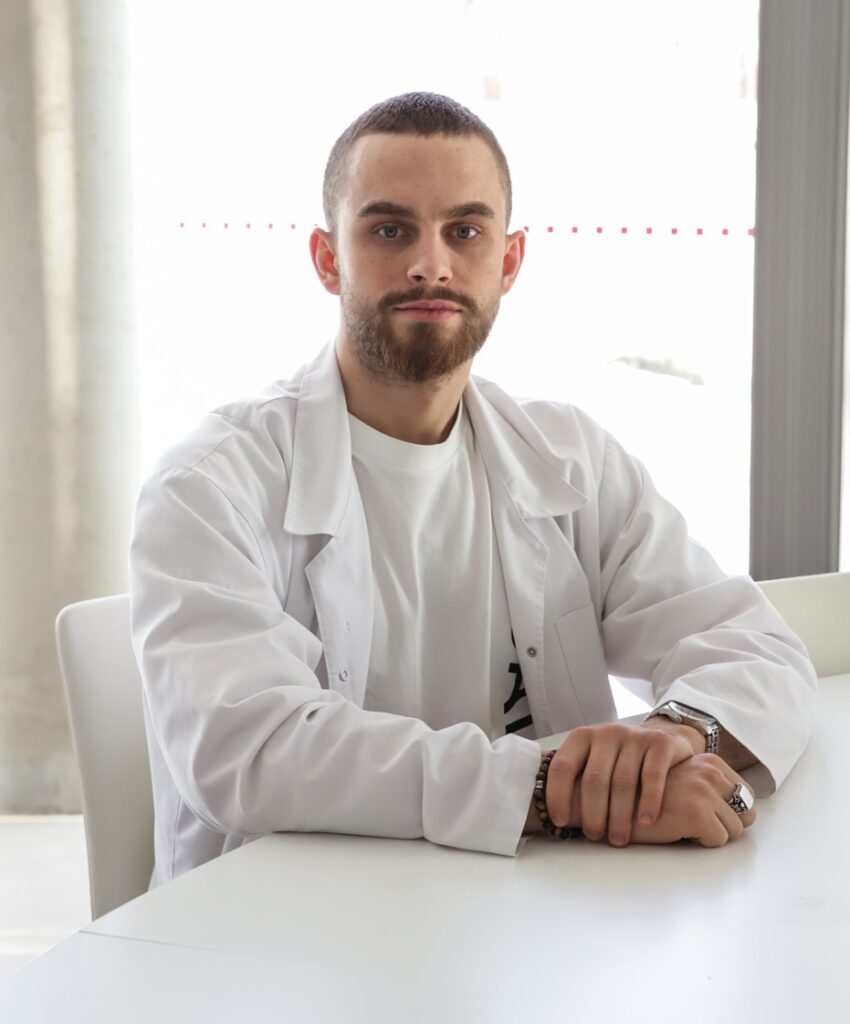
“Like many pharmacy students, I tried working in a retail pharmacy during my studies, in roles such as sales assistant. After some time, I realised that I was more drawn to drug development and the broader pharmaceutical business model – how a medicine or food supplement progresses from raw material to a product available to consumers,” he explained when reflecting on his early career choices.
Currently working at the LSMU Pharmacy, T. Maštaras is responsible for providing pharmaceutical services and pharmaceutical care, collaborating with the manager and whole team of the Pharmacy to address daily challenges and make decisions within the Pharmacy. His ambition and desire to create something new have driven him further: he brought together fellow students to develop a new supplement.
“Back in my fourth year, I brought together three fellow students, and we began developing the idea of an innovative food supplement to support the nervous system – and we even received a scholarship. The supplement has not yet been launched, but we are continuing to work towards bringing the idea to life,” he shared.
Happy with his career choice
According to T. Maštaras, working in a pharmacy provides valuable practical experience, helping to better understand the challenges patients face when using medicines.
“Medicines are often used incorrectly, and patients sometimes engage in self-medication, which can be dangerous to their health. I can advise, guide, and explain how to combine medicines and how to use them correctly and responsibly. I feel that I am needed,” he emphasised, highlighting the importance of pharmacists in society.
For school pupils considering a career as a pharmacist, he notes that it involves intensive studies, a high level of responsibility, and wide-ranging career opportunities.
“If you feel a calling to create something new in the healthcare sector, are full of ideas and curiosity, and are wondering how to bring those ideas to life, studying pharmacy at LSMU can become a solid bridge to turning your ambitions into reality,” he says.
Multidisciplinary studies
“Pharmacy studies are multidisciplinary – they integrate health, life, and physical sciences, enabling us to prepare specialists who can work across a wide range of areas, including pharmacies, the pharmaceutical industry, research laboratories, public institutions, and healthcare settings,” says Professor Ramunė Morkūnienė, Dean of the Faculty of Pharmacy at LSMU.
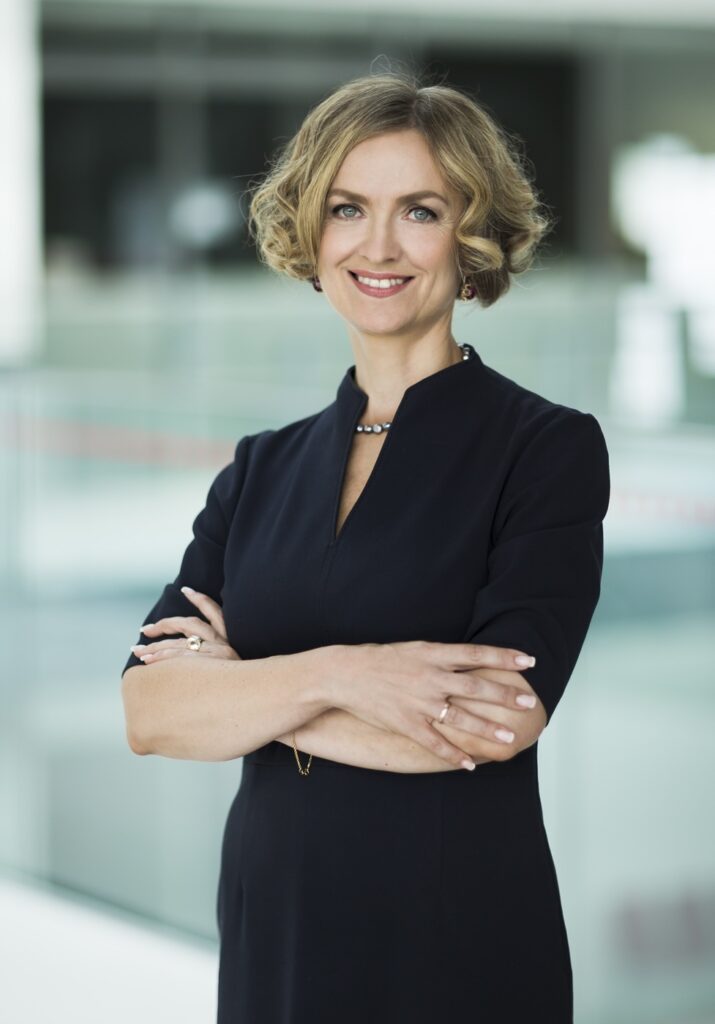
Pharmacy studies at LSMU provide a strong scientific foundation alongside extensive practical skills. Students learn to analyse, develop, and manufacture medicines, understand their effects on the human body, and deliver pharmaceutical services to patients.
According to the Dean, prospective students choose LSMU because of the strength of its Faculty of Pharmacy: leading researchers, a modern study environment, and the innovations emerging within the faculty. Graduates of the integrated Master’s degree in Pharmacy are highly sought after in the labour market.
“Here, students see the future – an opportunity to contribute to scientific breakthroughs and to develop next-generation pharmaceutical solutions. Pharmaceutical science at LSMU is constantly evolving: from 3D-printed personalised medicines to innovative cellular models and advanced exosome-based therapies – we are creating a future in which previously untreatable diseases become manageable,” Professor Morkūnienė emphasises as she speaks about the advantages of such studies.
More information about Pharmacy studies: https://lsmu.lt/en/admission/integrated-studies/pharmacy/
BackRecent articles