Simulation Centre of Medical Academy
Simulation Centre of the Medical Academy
The Simulation Centre of the Medical Academy of the Lithuanian University of Health Sciences (MASC) is a general academic unit of the University dedicated to the safe development of practical clinical and teamwork skills through medical simulation. Its mission is to enhance the quality of healthcare specialist training and improve patient safety.
The Centre coordinates and ensures the integration of simulation-based teaching and learning methods into the study programmes delivered by the faculties of the Medical Academy. It provides students, University staff and healthcare professionals seeking further professional development with opportunities to acquire and refine diagnostic, clinical, procedural and decision-making skills in both routine and variable clinical scenarios.
Our activities include the introduction and integration of innovative teaching methods into the study process, the provision of methodological support, the organisation of training courses, educational and professional development programmes and seminars, as well as conducting research. The Centre collaborates with other University units and with national and international institutions, and participates in national and international projects and programmes aimed at advancing simulation-based education.
ABOUT MEDICAL SIMULATION
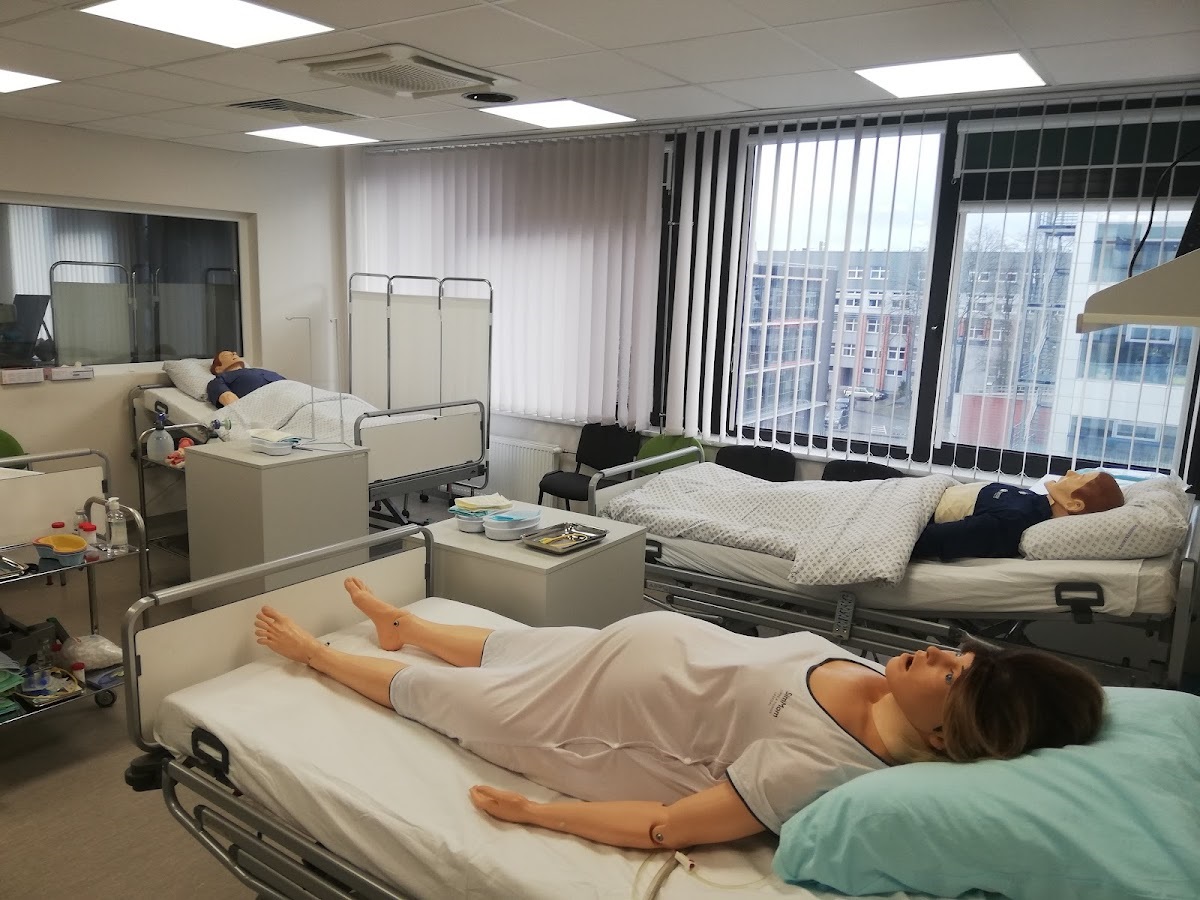
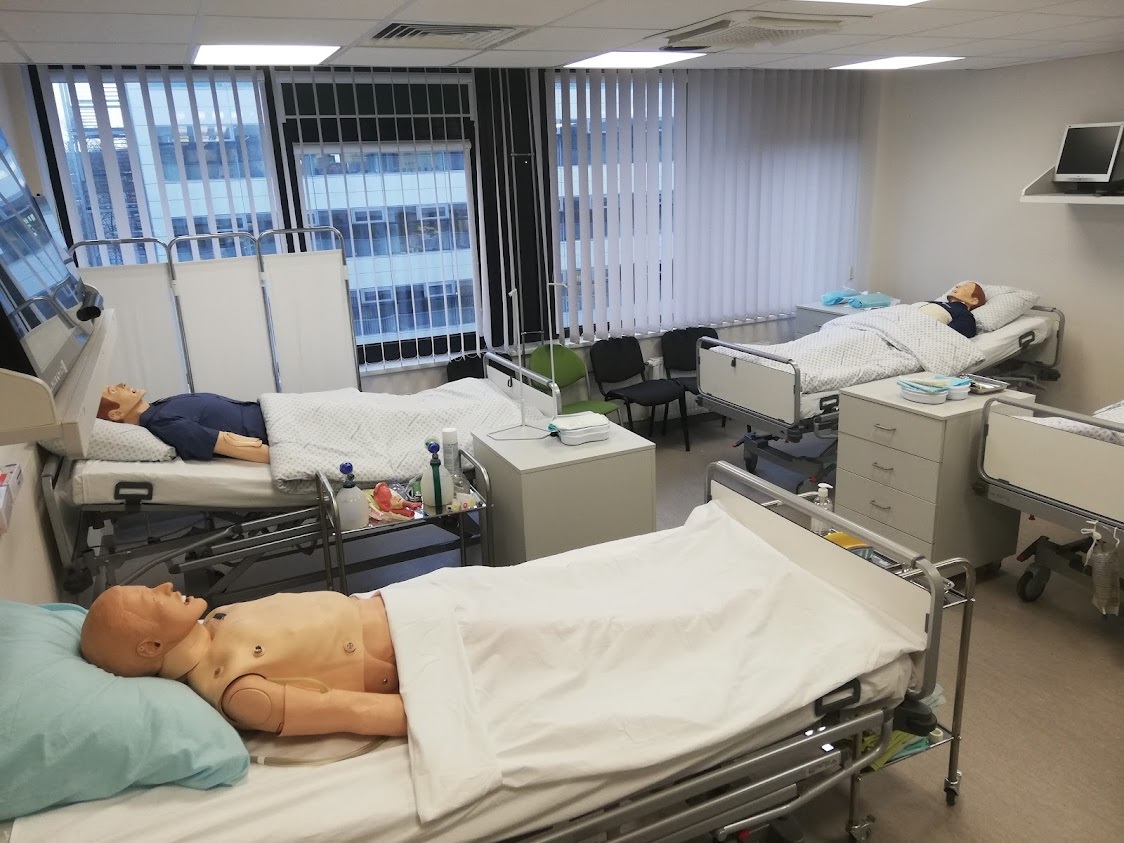
Medical simulation enables both routine and complex clinical situations to be recreated and practised without posing any risk to patients. Training is delivered using high-fidelity patient simulators, anatomical models, task trainers and other simulation equipment designed to replicate real patients, their clinical conditions or specific parts of the human body.
The simulation environment also makes it possible to recreate life-threatening emergencies, enabling learners to recognise critical situations, make clinical decisions and select appropriate interventions. This allows procedures to be practised repeatedly in a safe environment, facilitates the analysis of actions and errors, strengthens practical clinical skills, and prepares learners for real-life clinical practice.
The Centre provides the conditions for the medical students, resident doctors, physicians, nurses and other healthcare professionals to learn at their own pace while reinforcing theoretical knowledge through practical training. Participants have the opportunity to assess their own competence and develop skills in resuscitation, treatment, patient care, diagnostic procedures and a wide range of clinical interventions, as well as ultrasound diagnostics and laparoscopic surgical techniques.
Simulation-based education also supports the development of essential transferable skills, including communication with patients and colleagues, leadership, situation assessment, decision-making and effective teamwork.
Equipment and learning environment
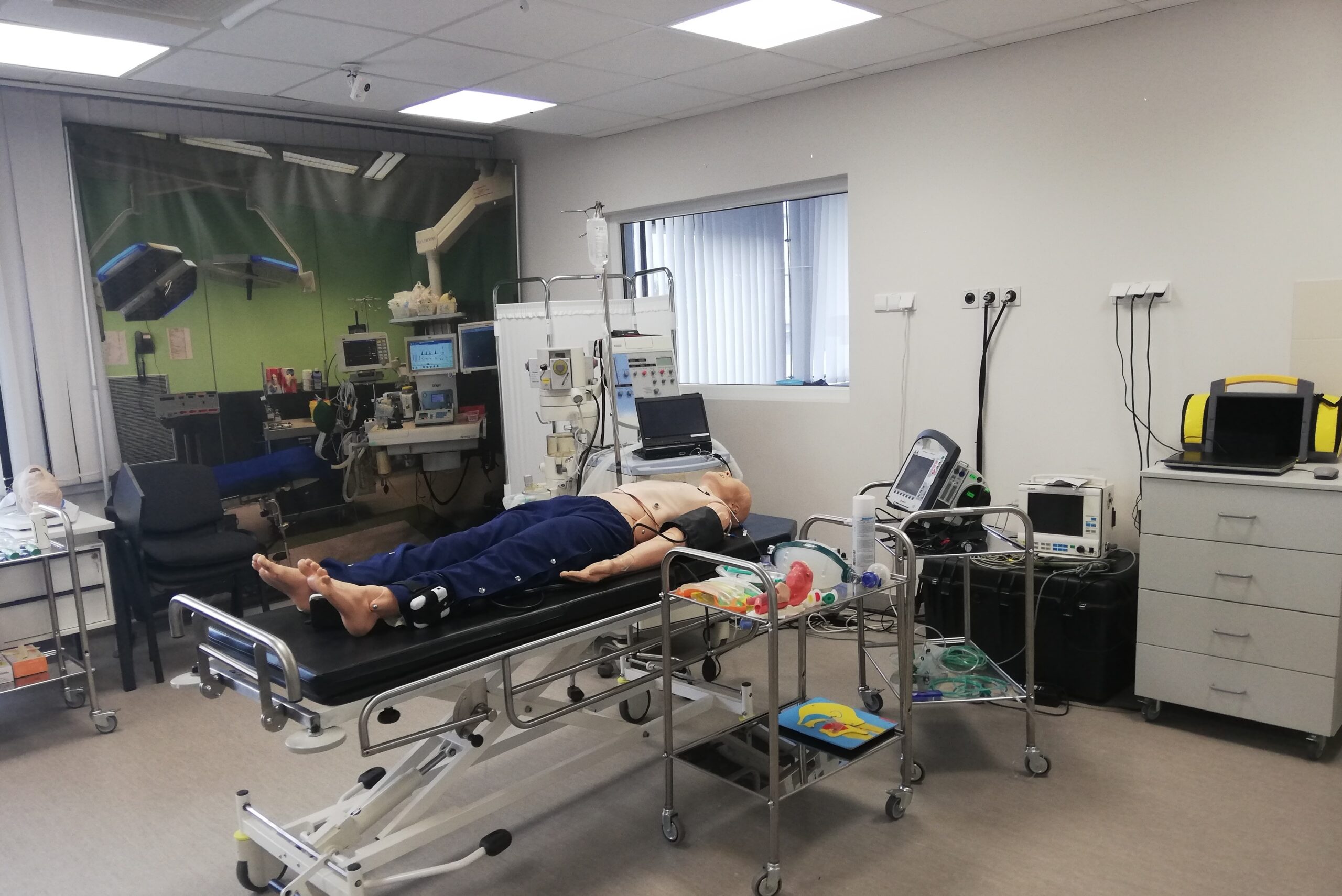
The Simulation Centre of the Medical Academy is equipped with the simulation equipment used to teach fundamental surgical, obstetric, anaesthesiology and intensive care, cardiology, pulmonology, nursing, diagnostic and therapeutic skills.
The Centre provides a realistic hospital environment in which learners can practise managing complex clinical scenarios in simulated settings, including an emergency department, an operating theatre or a hospital ward. These simulations involve the entire healthcare team, enabling participants to develop not only individual professional competencies but also interprofessional collaboration skills.
The Centre manages the use of simulation equipment, oversees its maintenance and continuous renewal, and ensures that the infrastructure is utilised efficiently in accordance with the principles of open access. It also provides methodological support to University students and staff in the field of simulation-based education, and develops simulation methodologies and recommendations tailored to the needs of individual study programmes.
Formerly known as the Medical Simulation Centre of the Faculty of Medicine of the Lithuanian University of Health Sciences, the Centre officially commenced its activities in 2015 following a decision of the University Council.
Virtual Operating Room
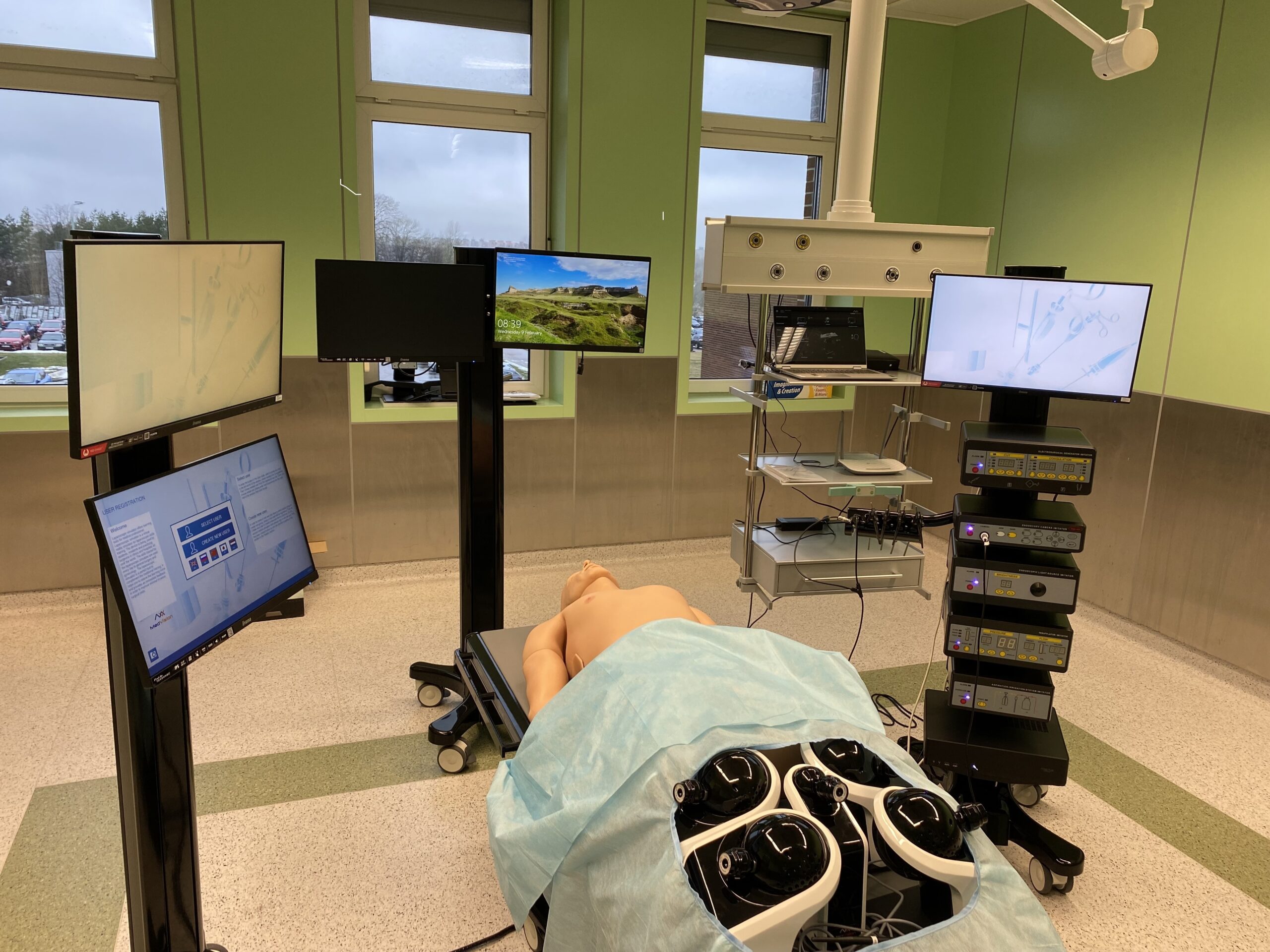
A virtual operating room has been set up within the operating room wing of the Department of Orthopaedics and Traumatology of Kaunas Clinics (situated on the 2nd floor of the Trauma and Emergency Care Centre building). This facility offers a unique opportunity to replicate and acquire proficiency in operative techniques and perioperative competences encompassing anaesthesia, critical situations, and both uncomplicated and complicated laparoscopic surgical procedures, among others.
The virtual operating room was procured using the funds of the LSMU project “LSMU activities aimed at improving the competencies and qualifications of doctors” (LSMU-GYD-KOM), project No. 09,4,2-ESFA-V-715-05-0001. It is part of the EU-funded entrustable professional activity (EPA) project, with the aim of simultaneously improving the simulation environment in residency studies.
Surgery modules:
- Basic skills of endoscopic surgery;
- Laparoscopy skills;
- Teaching of stitching and knot tying;
- Critical stitching and knot tying;
- Laparoscopic cholecystectomy;
- Complete laparoscopic cholecystectomy;
- Gynecological surgery;
- Salpingo-oophorectomy
- Total hysterectomy;
- Subtotal hysterectomy;
- Resection of the sigmoid colon;
- Acute adhesion obstruction of the small intestine;
- Diagnostics of the abdominal cavity;
- Hernioplasty;
- Splenectomy;
- Nephrectomy;
- Laparoscopic nephrectomy.
Booking the Centre’s facilities
The Simulation Centre of the Medical Academy may be booked, subject to availability, for lectures, training sessions, practical skills workshops and other educational activities. To book a teaching room or simulation equipment, please contact the Centre Administrator, Eglė Staškūnė, by email at egle.staskune@lsmu.lt.
Galllery