
Simulation Centre of Medical Academy
Aušra Geivelienė
Administrator of Simulation Centre of Medical Academy
Livita Bieliūnienė
Administrator of Simulation Centre of Medical Academy

The Centre of Medical Simulation of the Medical Academy of the Lithuanian University of Health Sciences (LSMU) is a general academic unit of the University that coordinates and develops simulation-based education within the Medical Academy.
The Centre brings together simulation-based education across all five faculties of the Medical Academy – the Faculty of Medicine, Faculty of Odontology, Faculty of Pharmacy, Faculty of Nursing and Faculty of Public Health – and seeks to systematically integrate modern simulation methods into different study programmes. As of 1 July 2025, the Centre operates across the entire Medical Academy.
The aim of the Centre of Medical Simulation is to enable students, medical residents, academic staff and healthcare professionals to acquire and develop professional competencies in a safe, controlled environment before applying them in real-life practice. Simulation-based education helps bridge the gap between theoretical knowledge and practice while developing technical and non-technical skills, clinical reasoning, decision-making, communication and teamwork.
The Centre’s activities include integrating simulation-based education methods into the study process, providing methodological support, coordinating simulation infrastructure and equipment, and implementing innovative educational technologies.
Simulation is an educational method that recreates real-life professional situations in a safe environment, allowing learners to practise procedures, make decisions, analyse their actions and learn from mistakes without putting patients at risk.
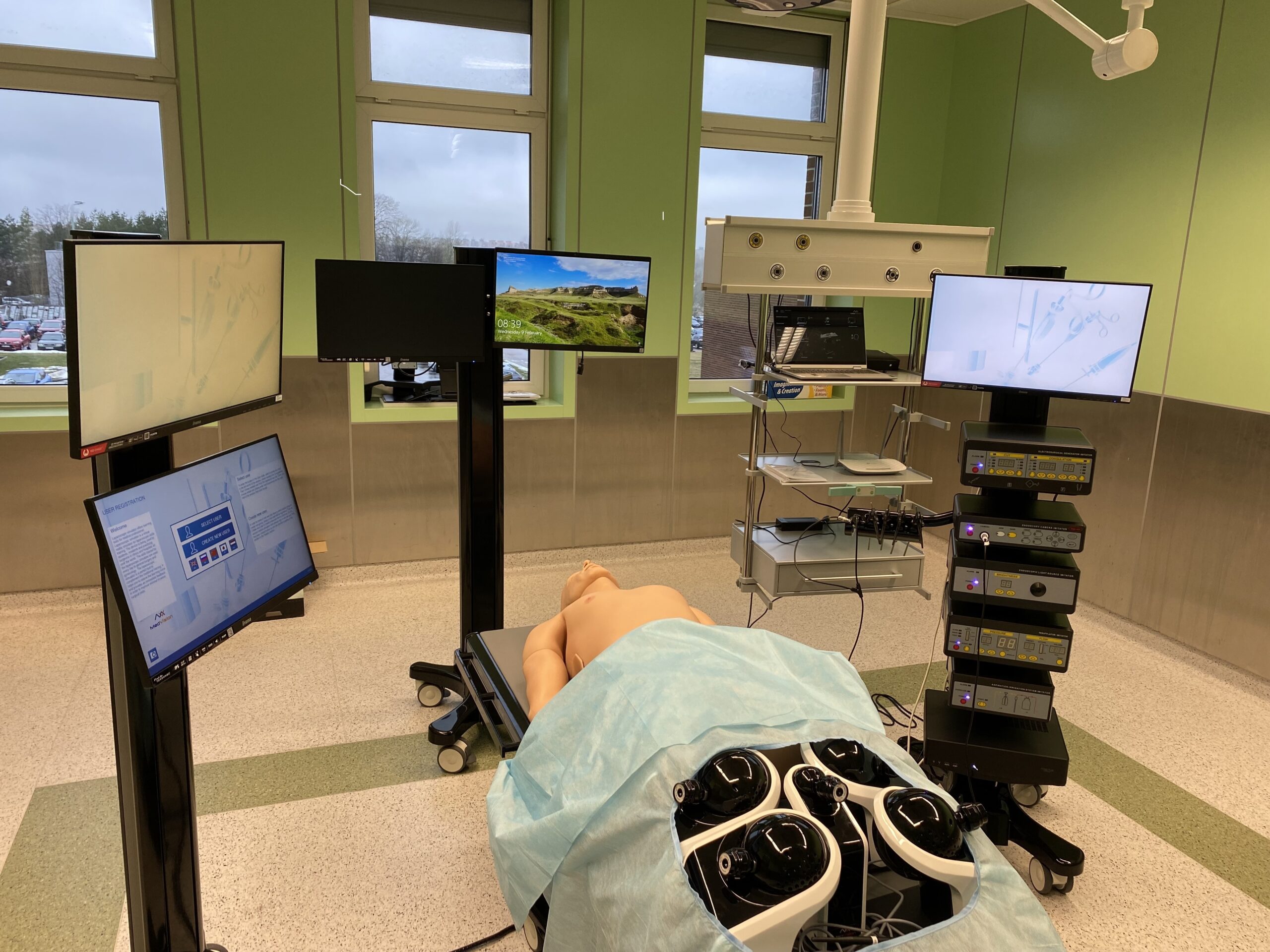
The Medical Academy uses simulation methods of varying levels of complexity, ranging from basic practical skills training with models and trainers to high-fidelity clinical scenarios, virtual and digital simulations, role-play and learning with simulated patients.
Simulation develops more than technical professional skills. Considerable emphasis is also placed on communication, teamwork, leadership, critical thinking, situation assessment and decision-making.
Simulation-based education is used at various stages of study – from the first years of university education through to final examinations, residency training and the continuing professional development of healthcare professionals. Simulation is also used to assess students’ competencies, including through the Objective Structured Clinical Examination (OSCE).
Simulation-based education is used in all five faculties of the Medical Academy, although the forms of simulation, technologies used and competencies developed vary according to the specific study programmes and the nature of students’ future professional practice.
Simulation facilities are located across different faculties and units of the Medical Academy, while their activities are coordinated centrally. This model enables the systematic development of simulation activities, efficient use of existing infrastructure and equipment, and the application of common quality principles, while also taking account of the specific requirements of each faculty’s study programmes and professional competencies.
Faculty of Medicine
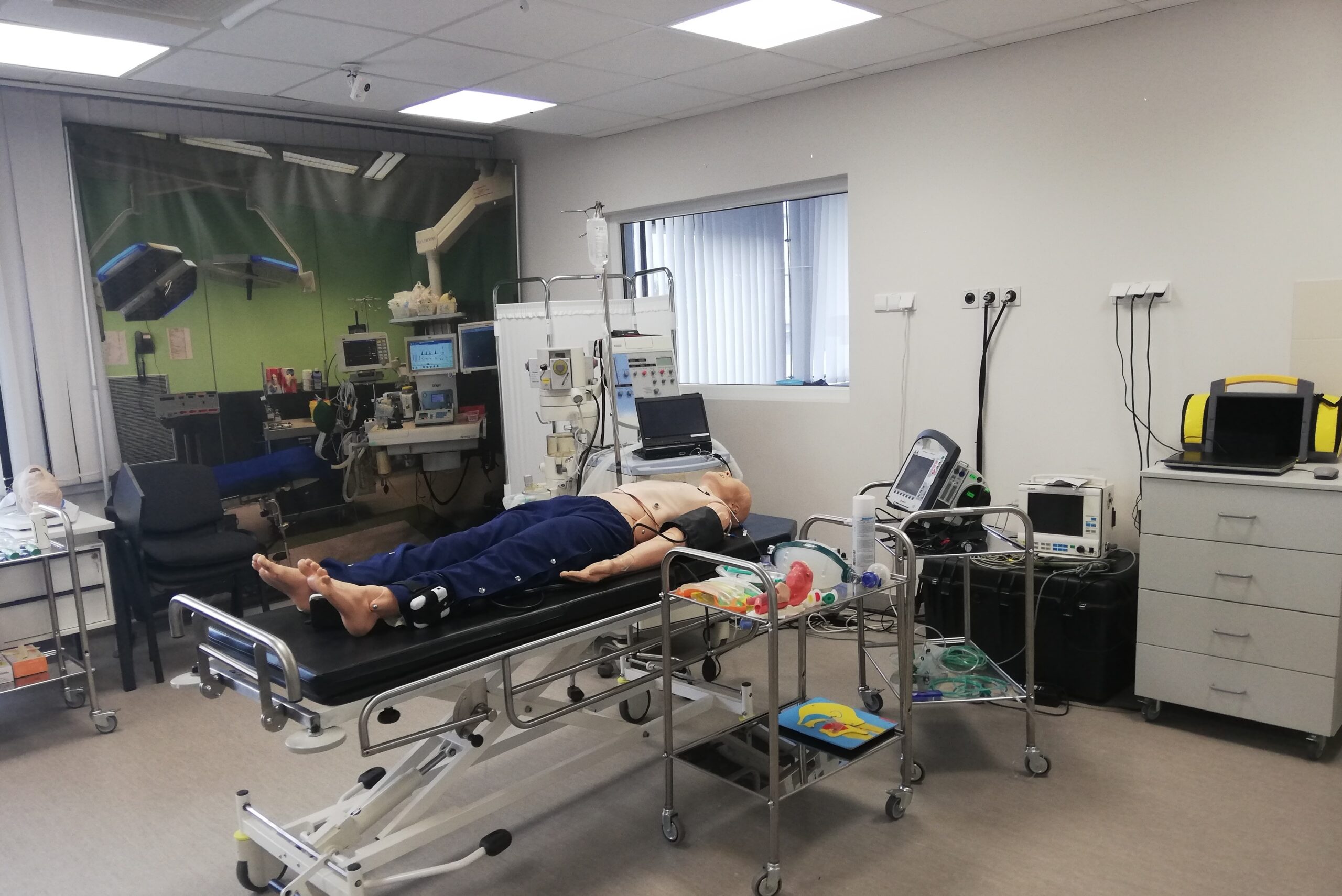
At the Faculty of Medicine, simulation encompasses a wide range of clinical situations and practical procedures – from assessing vital signs, administering injections, performing venepuncture, suturing wounds and managing airways to complex scenarios involving resuscitation, trauma, sepsis, acute respiratory failure, obstetric emergencies and other critical situations
An important feature of simulation at the Faculty of Medicine is the combination of clinical scenarios and procedural skills training with equipment used in real clinical practice, such as ultrasound systems, patient monitoring and infusion systems, and airway management equipment. Simulation is also closely integrated with the assessment of students’ practical competencies, with interim assessments conducted during their studies and an OSCE at the end of the programme.
Faculty of Odontology
Simulation at the Faculty of Odontology places particular emphasis on developing manual and procedural skills in an environment that closely replicates dental practice. Students learn correct ergonomics, instrument handling, tooth preparation, endodontic treatment, prosthodontics, periodontology, aesthetic restoration and professional oral hygiene procedures.
This area is also distinguished by the technologies used, including clinical and pre-clinical KaVo simulators and Simodont Dental Trainer 3D virtual simulators. In a three-dimensional virtual environment, students can repeat procedures and receive objective feedback on their performance before beginning to work with patients.
Faculty of Nursing
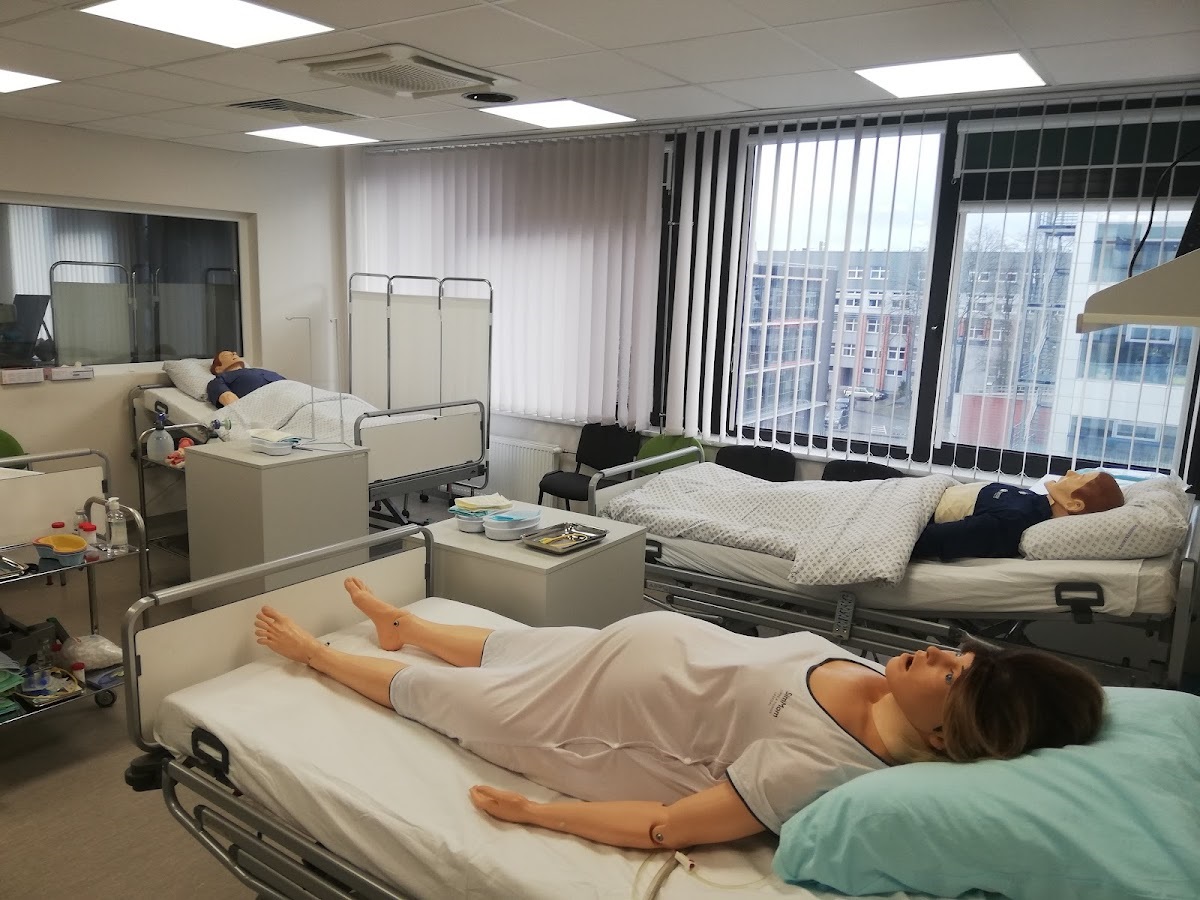
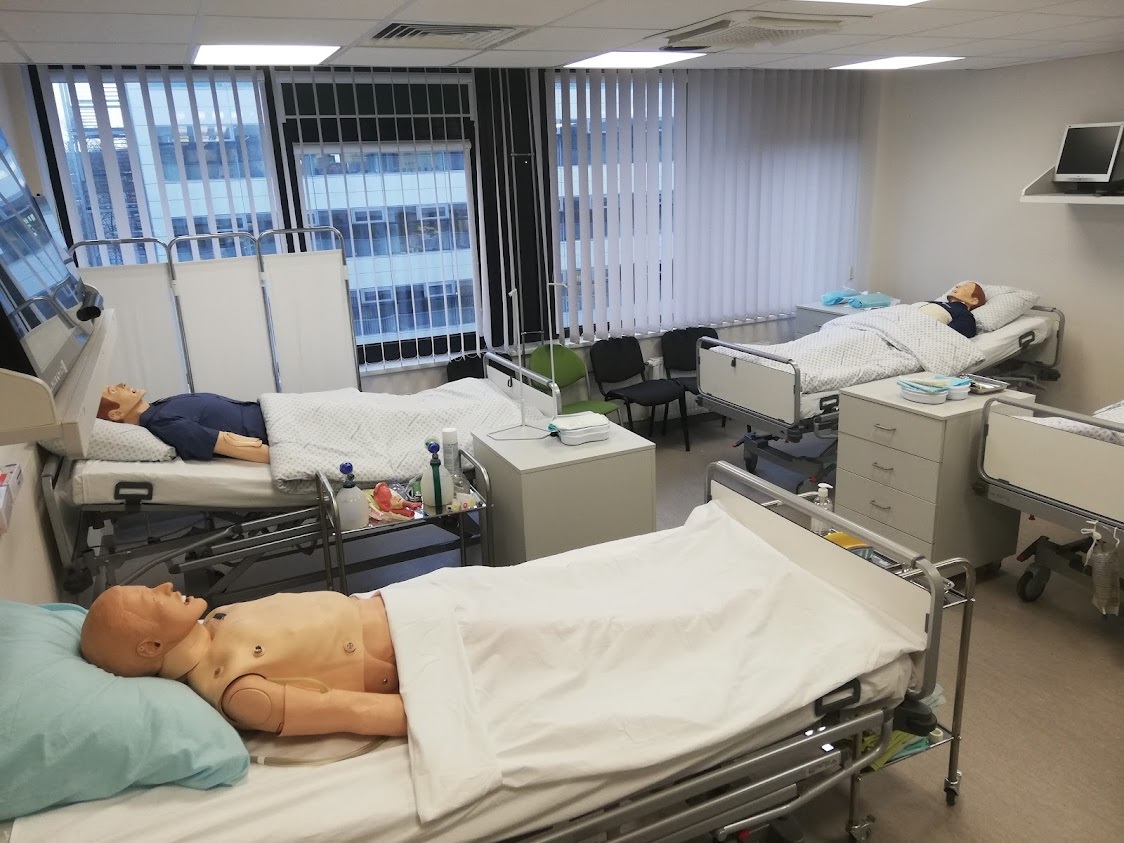
Simulation at the Faculty of Nursing combines practical nursing skills with patient assessment and care planning. Students learn to administer injections, perform catheterisation and other nursing procedures, assess patients’ condition, ensure their safety, comfort and hygiene, and communicate appropriately with patients.
Faculty of Pharmacy
At the Faculty of Pharmacy, simulations recreate real-life professional pharmacy practice and pharmacist–patient interactions. Students learn to counsel patients, assess medication use and potential interactions, address pharmacotherapy-related problems, and make and justify professional decisions.
Teaching methods include role-play, analysis of clinical cases and scenarios, and specialised learning environments, including a simulation pharmacy, an e-prescription training environment and patient service areas. Recording and reviewing consultations is also used to support students’ self-reflection and improve their professional communication skills.
Faculty of Public Health
Simulation at the Faculty of Public Health focuses primarily on communication, counselling, assessment of human behaviour, analysis of ethical and organisational situations, leadership and decision-making.
Students participate in role-play, analyse complex scenarios, learn to provide counselling, address ethical dilemmas, communicate with different stakeholders involved in a scenario and make decisions under conditions of uncertainty. Audiovisual technologies make it possible to analyse completed simulations and provide structured feedback, which is particularly important in developing communication and counselling competencies.
The infrastructure of the Centre of Medical Simulation of the Medical Academy comprises simulation and practical skills facilities located across different University units, patient simulators of varying levels of fidelity, procedural task trainers, dental simulators, virtual and digital learning technologies, and medical equipment used in real clinical practice.
Access to the Centre’s infrastructure is based on an open-access approach: simulation facilities, equipment and learning environments may be used by students and academic staff from different faculties, depending on learning objectives and infrastructure availability. This enables more efficient use of the University’s resources, promotes interdisciplinary collaboration and supports the development of interprofessional education.
The Centre coordinates the use and renewal of simulation equipment, provides methodological support for simulation-based education, and contributes to the implementation of new teaching methods and technologies into the study process.
The development of the Centre of Medical Simulation of the Medical Academy focuses on the quality, integration and interdisciplinary nature of simulation-based education. One of its key priorities is the development of interprofessional simulation, enabling students from different study programmes to learn together in situations that reflect real-life professional practice.
Another important area is the integration of simulated patients into the educational process. Their participation enables students to develop communication, patient assessment and skills for managing complex or sensitive professional situations in a realistic and safe environment.
The Centre is also expanding opportunities for self-guided learning, introducing innovative educational technologies, developing more complex simulation scenarios, and working towards the consistent application of common quality principles for simulation-based education throughout the Medical Academy.
Simulation serves as a bridge between theoretical knowledge and real-life professional practice. The Centre aims to enable students to acquire, practise and enhance essential professional skills in a safe simulation environment before applying them in real patient care.
The Centre of Medical Simulation of the Medical Academy provides facilities for companies, organisations, healthcare institutions, doctors and other healthcare professionals to organise training courses, seminars and practical training sessions.
The Centre’s facilities are available for hire for training purposes, together with simulation equipment and teaching aids. Technical support from our laboratory staff is also available, subject to a fee. Technical support includes preparation of the facilities and equipment, assistance with their use, and resetting the facilities and equipment after the training session.
External training may only be scheduled outside student teaching hours. Training times, requirements for facilities and equipment, and the terms and conditions of service provision are agreed individually in advance. For enquiries about organising training and booking facilities, please contact the Administrator of the Centre, Livita Bieliūnienė: livita.bieliuniene@lsmu.lt