Nurse’s Journey: from Studies at LSMU to Becoming the ‘Sleep Fairy’ of an Operating Theatre
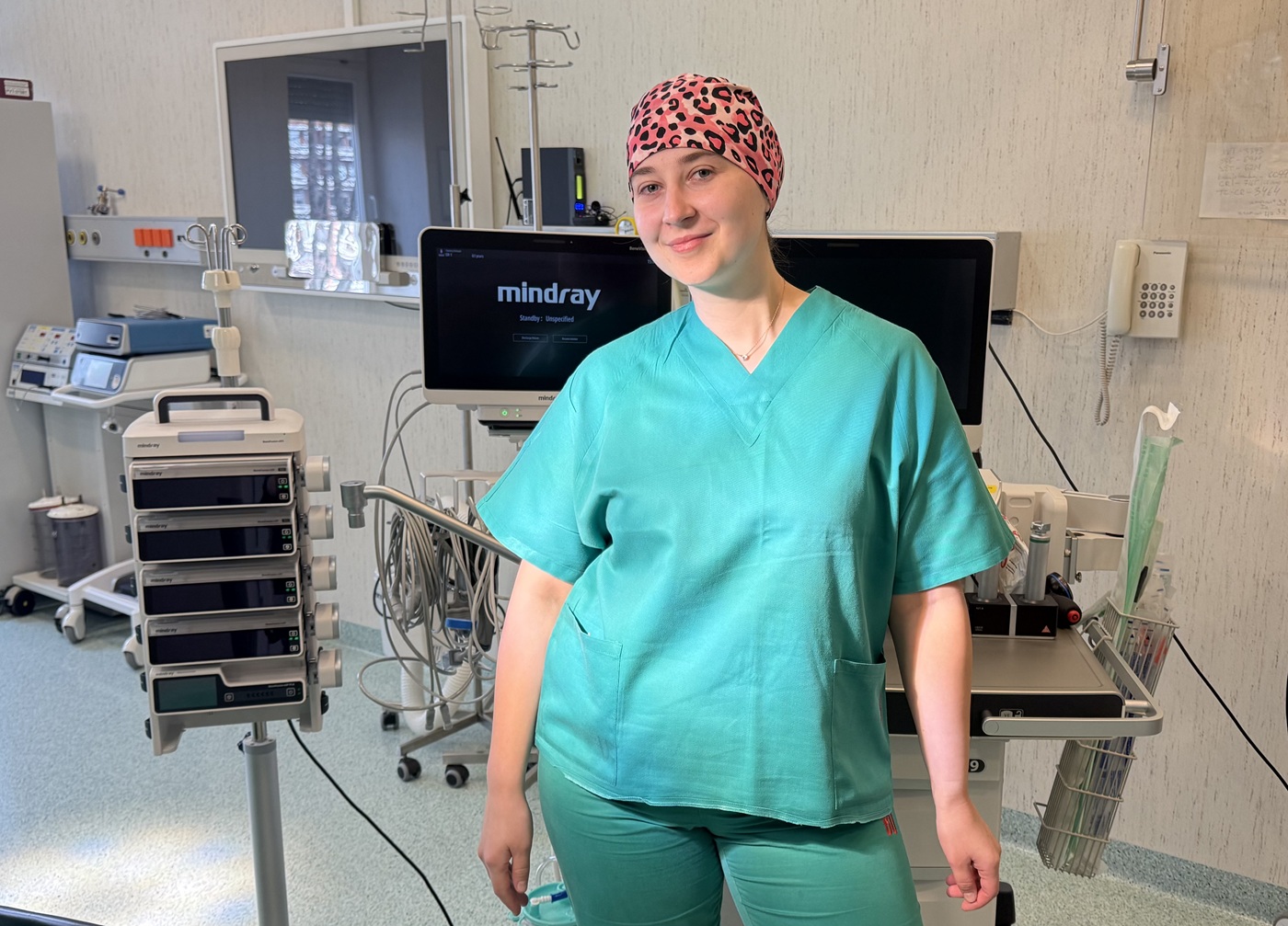
A university degree in Nursing may open doors to an exciting career in less conventional settings, such as an operating theatre. The nurses that work there are rightly called the professional “sleep fairies” as they are the ones who welcome the patient before the operation, reassure them, prepare them for the procedure, administer medication, and ensure that the patient does not feel pain during surgery. The nurse is usually the first person the patient sees having woken up from anaesthesia.
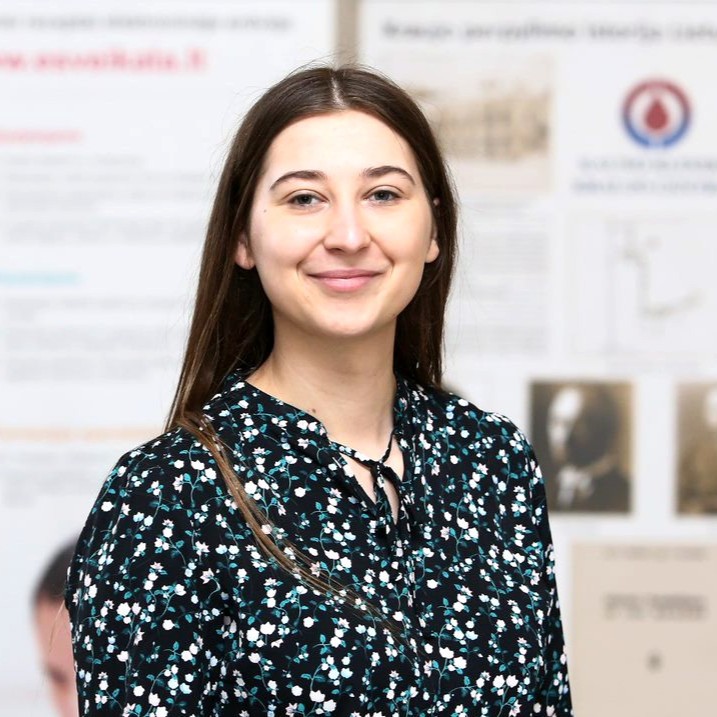
“The profession requires not only medical knowledge but also strong communication skills,” emphasises Evelina Alūzaitė, an anaesthesia and intensive care nurse at the Department of Anaesthesiology at the Hospital of the Lithuanian University of Health Sciences (LSMU) Kauno Klinikos, who is also an LSMU nursing graduate and a doctoral student in Nursing.
A nurse’s day is almost like two in one: work at the Department of Anaesthesiology during the day, and doctoral studies in Nursing in the evening.
First job – already during her studies
E. Alūzaitė took her first professional steps in this field during the COVID-19 vaccination campaign, administering vaccines to patients at a vaccination centre, while still studying for the bachelor’s degree in nursing at LSMU.
Today, her role as a nurse is far more complex and implies a much greater deal of responsibility. She has chosen a relatively new and highly dynamic specialisation of an anaesthesia and intensive care nurse in the operating theatre. Although each day is different, with both the nature of the surgeries and patients’ health indicators constantly changing, her core responsibilities remain the same: administering medication to ensure the patient’s comfort during surgery and providing effective pain relief while they are under anaesthesia.
From political science to nursing
E. Alūzaitė’s professional path took a different turn from what she had originally planned. At school, she was most drawn to studying political science. However, attending a nurses’ club at Kėdainiai Hospital was enough to change her initial plans.
“I visited the hospital every week, where I was able to observe the nurses’ work at close quarters and even help out a little. At first, the profession caught my interest as a meaningful and engaging activity, and gradually I realised that this was exactly what I wanted to study,” she recalls.
Her determination to pursue her chosen field was also tested during the admissions process. After not being accepted into her preferred programme on the first attempt, E. Alūzaitė enrolled in veterinary medicine at LSMU. Nevertheless, after a discussion with her family, she reapplied for nursing in the next admissions round – and was accepted.
Learning to learn is the hardest part
Looking back on her time at LSMU, E. Alūzaitė describes this period as one of the best in her life: the start of independent life and her first experience of living away from her parents. Her fellow students also played an important role – they were close-knit, friendly, supportive, and always willing to help. That support was truly needed, as she found the first year of her nursing studies the most challenging: she had to rediscover how to study, how to quickly grasp and retain large amounts of diverse information.
At school, you learn from a textbook, and tests are based only on what you have studied. At university, everything is different – exams are more demanding, and you need to engage more deeply and truly understand the material. She began exploring the study methods that suited her, using flashcards, visual notes, diagrams, and drawings.
The first patient and a forgotten introduction
During the studies, students first train in simulation labs: administering medication, performing venepuncture and other procedures using mannequins and models. However, E. Alūzaitė still vividly remembers her first real patient. Overwhelmed by stress, she even forgot to ask the patient’s name or introduce herself.
“I simply approached the patient, administered the medication – and that was it,” she recalls with a smile.
Later, she realised how important it is for patients to know who you are and what you are doing. According to the nurse, medicine is not only about technique or procedures. Sometimes, you can make a patient’s condition can be alleviated simply through conversation – care, empathy, the ability to listen, and finding the right words when working with people are not just valuable but also prerequisite qualities.
The practical skills required for the job developed over time. Nurses follow a simple rule: if a procedure does not go as planned after a few attempts – for example, locating a vein and performing a venepuncture – they call a colleague for assistance. Asking for help is not a weakness. E. Alūzaitė adds with a smile that now she is often the one being called upon.
She discovered her specific area of specialisation while studying for a Master’s degree in Advanced Nursing Practice, in the anaesthesia and intensive care programme, when she first observed a caesarean section. Realising that she wanted to work in the operating theatre, and later, specifically in anaesthesia, became the turning point in her professional life.
Learning and developing every day
Working in the operating theatre is often emotionally demanding. Some days are particularly difficult: resuscitations, acute cases, and patients in unstable conditions. The level of stress is high, as it involves responsibility for a patient’s life. However, E. Alūzaitė describes herself as calm and level-headed, and says she is able to remain composed even in highly stressful situations.
After a long day at work, she unwinds by taking a walk in nature or reading a good book. She tries to follow a clear principle: once you leave the hospital grounds, you leave work behind.
Recently, much of her time has been devoted to her doctoral studies. This field of nursing science significantly complements her work, encompassing nursing innovations, scientific research, and digital technologies. Her studies not only help her grow as a specialist but also provide a beneficial mental shift away from the demands of daily practice.
For those considering nursing studies, E. Alūzaitė advises first testing themselves in a real environment – visiting a hospital, volunteering, or otherwise observing the work at close quarters. It is important to ask yourself: am I afraid of blood? Could I work in such an environment? Do I truly feel that this is the right place for me? All other skills, she says, can be learned.
“The nursing profession offers a wide range of opportunities. You can work in a hospital ward, in primary healthcare, in emergency services, or as part of a family doctor’s team. However, it is worth simply trying it out first – it will then be much easier to find your place,” says the anaesthesia and intensive care nurse.
The Faculty of Nursing at the Lithuanian University of Health Sciences (LSMU) also offers other in-demand programmes in nursing and rehabilitation: Midwifery, Occupational Therapy, or Physiotherapy.
Back