Holistic mixed approaches to capture the real life of children with Rare Eye Diseases
- Project acronym: SeeMyLife
- Principal investigator (LSMU): prof. dr. Reda Žemaitienė
- Project coordinator: prof. Hélène Dollfus
- Project duration: from 2022-08-01 to 2026-03-31
- Funding programme: EJP RD
- Total project value: 1 648 073,32 Euro
- Part of the project value allocated to the LSMU: 100 000,00 Euro
- Video footage: www.youtube.com/SeeMyLife
Background: The SeeMyLife project is an international, multidisciplinary research initiative focused on understanding and improving the quality of life for children and adolescents with visual impairments caused by rare eye diseases. These conditions are a leading cause of severe visual impairment or blindness in European children, significantly affecting not only their physical health but also their psychological, emotional, social, and familial well-being. The SeeMyLife research aims to identify and quantify these different constraints and difficulties, so that they can be taken into account when proposing care and thus better adapt the quality of care for children with a rare eye diseases.
By integrating both quantitative and qualitative research methods, SeeMyLife seeks to create a validated, transnational quality-of-life assessment tool. This tool will serve as a foundation for developing more responsive and person-centered healthcare services for children and adolescents with rare eye diseases, aligning with international standards.
This project has received funding from European Horizon 2020 programme (project No 825575) under grant agreement with the Research Council of Lithuania (LMTLT).
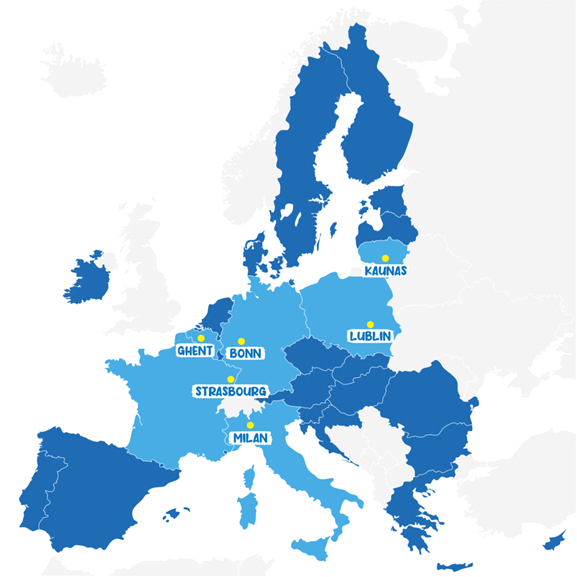
PROJECT PARTNERS
- 1. Hélène Dollfus, Hôpitaux universitaires de Strasbourg (HUS), Center for Rare Eye Diseases (CARGO) & Management team of European Reference Network for Rare Eye Diseases (ERN-EYE) (france)
- 2. David LeBreton, University of Strasbourg (UNISTRA), Maison interuniversitaire des sciences de l’homme (MISHA) (France)
- 3. Robert Finger, University Hospital Bonn (UKB), University Eye Hospital, Department of Ophthalmology (Germany)
- 4. Matilde Leonardi, Fondazione IRCCS Istituto Neurologico Carlo Besta (FINCB) (Italy)
- 5. Bart Leroy, Ghent University Hospital (GUH), Department of Ophthalmology, Unit for Ophthalmic Genetics (Belgium)
- 6. Reda Žemaitienė, Lithuanian University of Health Sciences (LSMU), Department of Ophthalmology, & Department of Bioethics (Lithuania)
- 7. Katarzyna Nowomiejska, Medical University of Lublin (Umlub), Department of General Ophthalmology (Poland)