International Seminar in Kaunas Showcases Innovative Cold Plasma Therapy in Dermatology
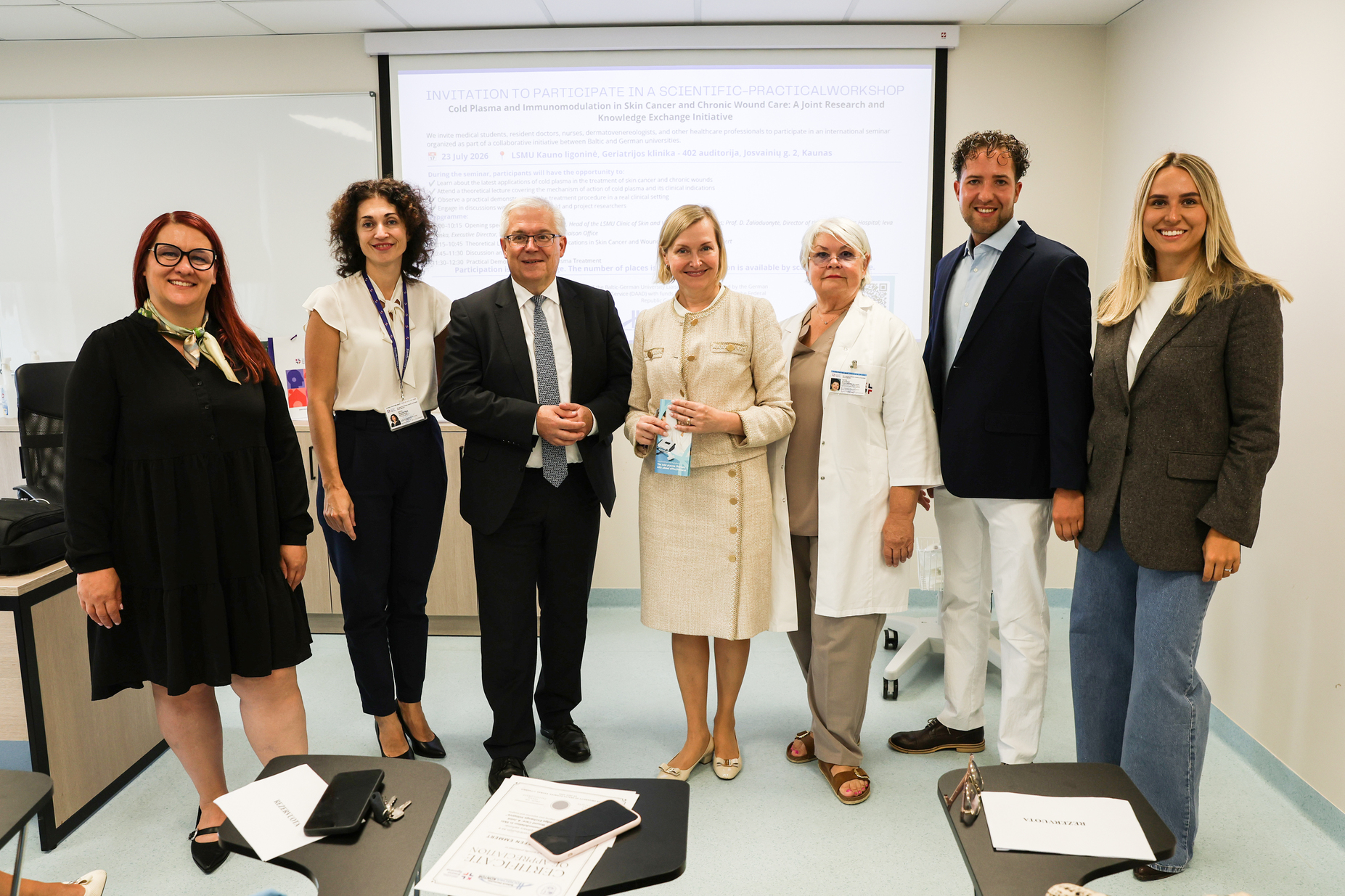
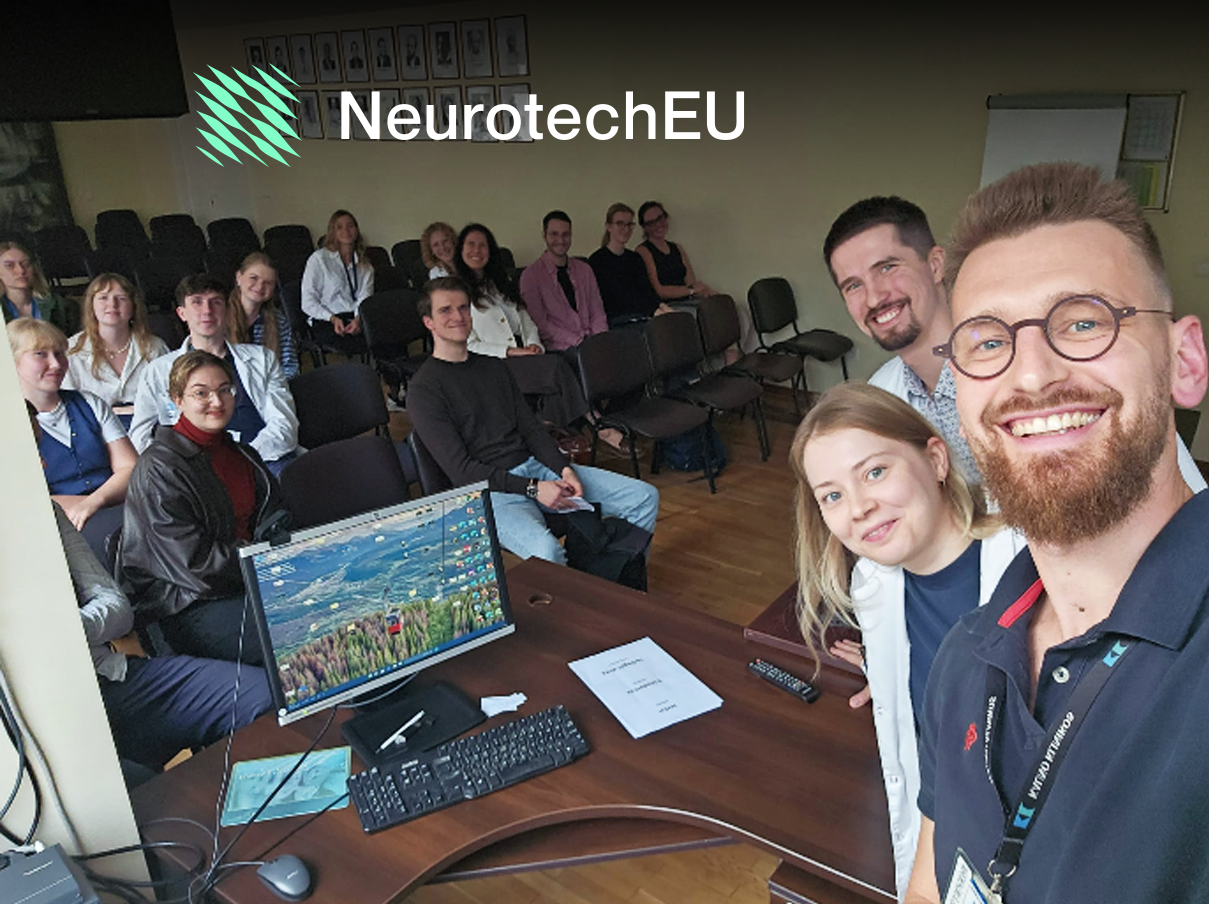
On 23 July 2026, the Kaunas Hospital of the Lithuanian University of Health Sciences (LSMU) hosted the international scientific and practical seminar “Cold Plasma: An Innovative Treatment Methos in Dermatology: From Research to Clinical Practice”, bringing together medical students, resident doctors, nurses, specialists in skin and venereal diseases, geriatricians and other healthcare professionals.
The seminar aimed to present the latest scientific advances and clinical experience related to the application of cold plasma in dermatology, while fostering international academic and professional collaboration among healthcare specialists.
“This seminar forms part of a project supported by the Baltic-German University Liaison Office. Through this project, we aim to improve the management of chronic wounds by introducing a new treatment method – cold plasma,” said Professor Skaidra Valiukevičienė, Head of the LSMU Department of Skin and Venereal Diseases, as she opened the seminar.
The Department of Skin and Venereal Diseases at the LSMU Kaunas Hospital provides specialised care for dermatology patients with chronic wounds. Integrating cold plasma treatment into inpatient care every other day alongside conventional therapies has the potential to reduce hospital stays while enabling treatment to continue on an outpatient day programme basis.
Egita Brazaitienė, Director for Management at the LSMU Kaunas Hospital, encouraged participants to make the most of the opportunity to acquire new knowledge and apply it in their everyday clinical practice.
“One of the strategic priorities of the LSMU Kaunas Hospital is the advancement of research and education. Seminars such as this, which bring together distinguished experts willing to share their experience and provide us with opportunities to explore new treatment methods through practical training before implementing them in clinical practice, demonstrate that we remain committed to this objective. I wish you an inspiring seminar and hope that the knowledge you gain will support your daily work,” she said.
Ieva Pranka, Executive Director of the Baltic-German University Liaison Office, emphasised that the project would strengthen research capacity, promote academic exchange and establish a solid foundation for long-term institutional cooperation.
“Today’s seminar is an excellent initiative for exchanging knowledge and experience. The German Academic Exchange Service (DAAD) promotes scientific cooperation between the Baltic States and Germany by creating opportunities for joint research, knowledge exchange, the sharing of ideas and the development of new partnerships,” she said, thanking all project partners for their commitment and contribution.
Participants were introduced to the latest developments in the application of cold plasma. They attended a theoretical lecture explaining the principles of the technology and its clinical indications, observed a live demonstration of the procedure in a real clinical setting, and took part in discussions with leading experts and researchers involved in the project.
The keynote lecture, “Cold Plasma Applications in Skin Cancer and Wound Care”, was delivered by Professor Steffen Emmert, who presented the latest research findings and clinical experience in this rapidly evolving field.
“This is a truly exceptional field that we have been developing for almost twenty years. The skin is the largest organ of the human body and is readily accessible from the outside, much more so than internal organs. For this reason, plasma technologies were initially developed specifically for the treatment of skin diseases,” Professor Emmert explained.
Following his presentation, Professor Emmert emphasised that cold plasma represents a safe and effective treatment method in dermatology.
“Cold plasma should become a standard approach to wound management. My key message is to encourage healthcare professionals to become familiar with this plasma technology, known as cold plasma, because it has the potential to become the laser therapy of the twenty-first century,” the professor from Germany noted.
The project on the application of cold plasma in dermatology is being implemented by the LSMU Department of Skin and Venereal Diseases in cooperation with the Rostock University Medical Centre (Germany) and the LSMU Kaunas Hospital. Its objectives are to introduce this innovative treatment modality, facilitate the exchange of theoretical knowledge, implement the method in clinical practice and conduct scientific research.
The project is led by Professor Skaidra Valiukevičienė of the LSMU Department of Skin and Venereal Diseases and Professor Steffen Emmert of the Clinic and Polyclinic of Dermatology, Venereology and Allergology at Rostock University. The LSMU research team also includes doctoral researcher Karolis Pampikas and resident doctor Livija Bakšienė.
Another component of the project involves research placements for investigators and scientists at the Rostock University Medical Centre. The project will also provide partial funding for a randomised case-control study evaluating the effectiveness of cold plasma therapy combined with immunomodulatory treatment in patients with skin cancer.
The project is implemented with the support of the Baltic-German University Liaison Office of the DAAD and is funded by the Federal Foreign Office of the Federal Republic of Germany.