ThrombUS+ Horizon Europe Project Initiates Clinical Trials: New EU-funded Project Tackling Deep Vein Thrombosis Detection
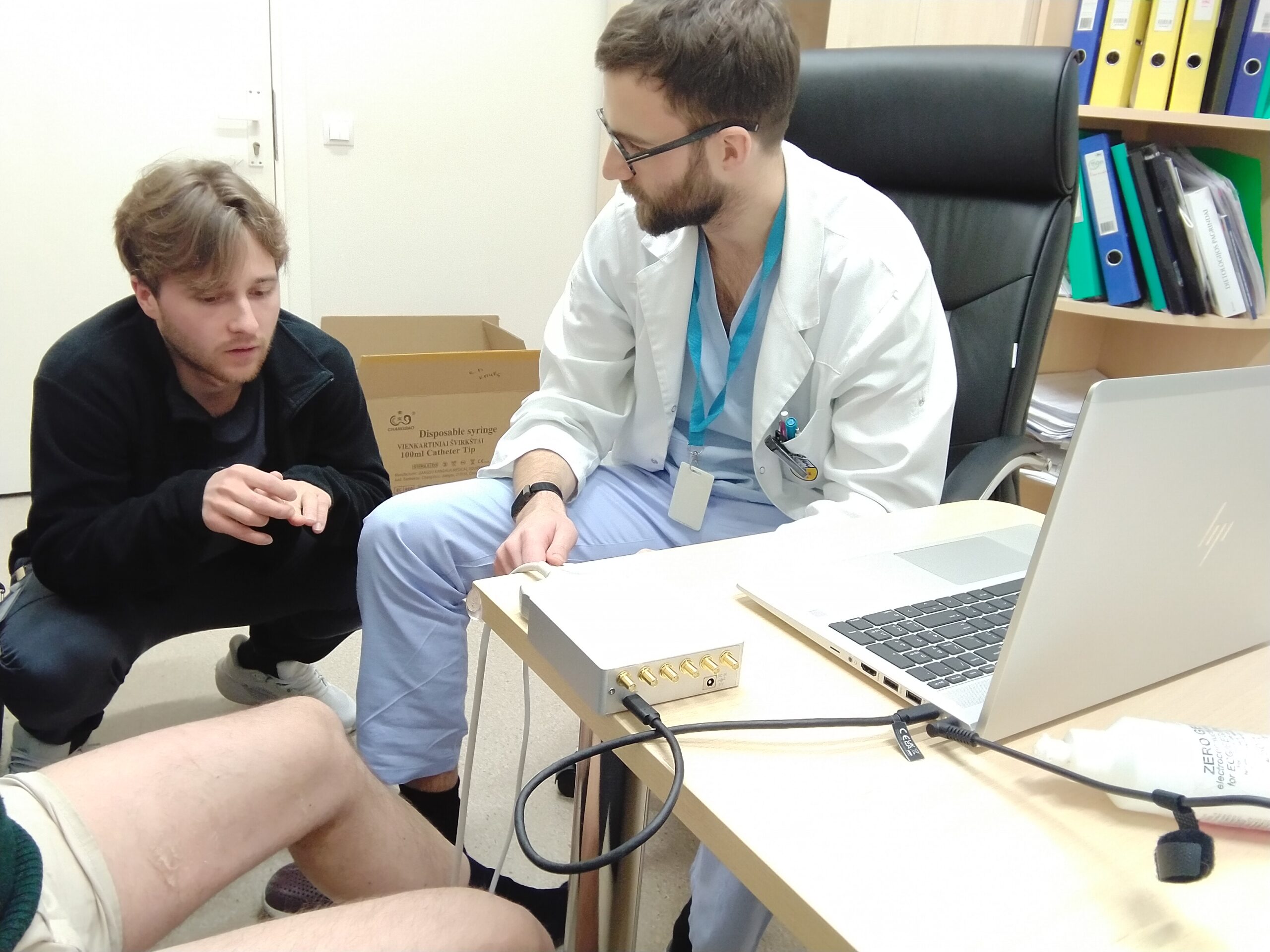
The ThrombUS+ Horizon EU Project has officially initiated ThrombUS+ Clinical Study B1, to collect compression ultrasound videos using the newly developed ultrasound ThrombUS+ probe, specially designed to be integrated into a wearable for autonomous, point-of-care monitoring for deep vein thrombosis (DVT) of the lower limbs.
In parallel, the project has already successfully enrolled more than 1900 patients in 5 hospitals across Greece, Lithuania, Italy and France within the project’s Clinical Study A. The purpose is to collect large compression ultrasound datasets using conventional scanners to train, validate, and test Artificial Intelligence (AI) models to automatically detect deep vein thrombosis.
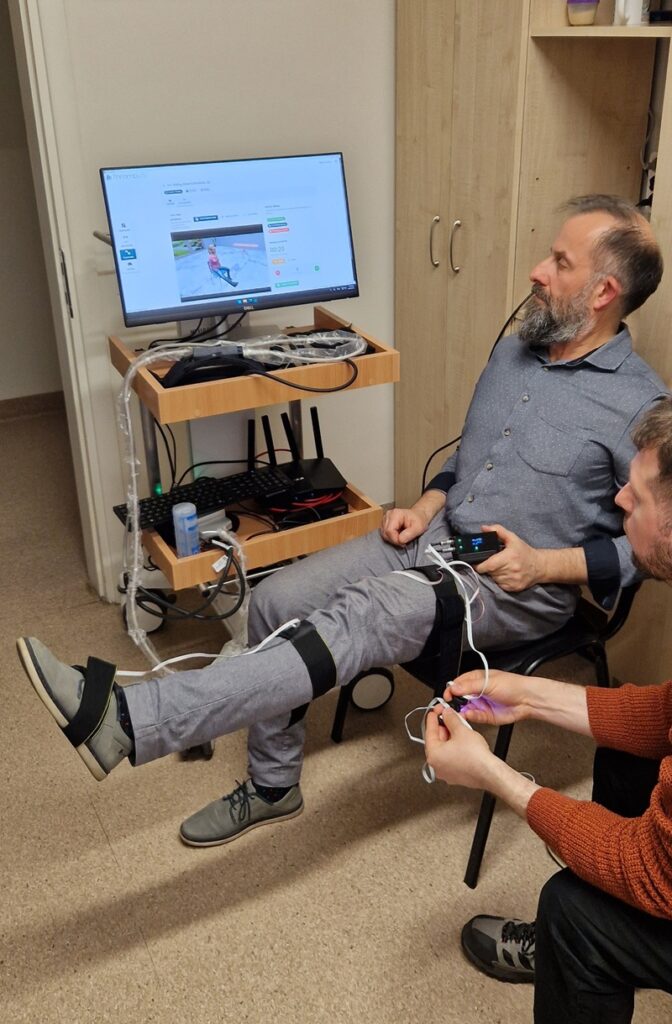
Further validation of the ThrombUS+ wearable will be carried out in clinical settings through one early feasibility study and one multi-center clinical trial.
ThrombUS+ stands at the forefront of a revolution in medical diagnostics and ultrasound imaging. The project paves the way towards the new era of disruptive diagnostics where artificial intelligence and ultraportable or even wearable technology promise to alleviate the burden on practitioners and transition diagnostics into continuous and autonomous point-of-care services.
About ThrombUS+
ThrombUS+ is supported by a substantial 9.5M€ fund from Horizon Europe Innovation Action. Partners from eight European countries are tasked with the development of an innovative wearable diagnostic device for point-of-care, operator-free, continuous monitoring of deep vein thrombosis (DVT). The project is being led by Prof. Eleni Kaldoudi of the Athena Research Center and has partners from Greece, Lithuania, France, Germany, Italy, Finland, Spain, and the UK.
The ThrombUS+ project plans a wearable ultrasound probe for continuous lower limb vascular imaging, including innovation on the tissue compression actuator required to realize compression imaging for DVT detection. The project also integrates electrical impedance plethysmography and light reflection rheography to create a robust suite of vascular assessment methods all in one autonomous wearable.
Addressing a Critical Health Risk
DVT involves the formation of blood clots in deep veins and poses a significant health risk, with potentially life-threatening consequences when left undetected. Alarmingly, a significant portion (up to two-thirds) of DVT cases present no symptoms, making early diagnosis a significant challenge. The ThrombUS+ project seeks to bridge this gap by providing a user-friendly and accessible personal solution.
Consortium
- Athena Research Center, Greece
- Kaunas University of Technology, Lithuania
- Vermon SA, France
- Fraunhofer IPMS, Germany
- Telemed Ultrasound Medical Systems, Lithuania
- medis Medizinische Messtechnik GmbH, Germany
- ComfTech srl, Italy
- Tampere University, Finland
- Lietuvos sveikatos mokslų universitetas (LSMU), Lithuania
- Papageorgiou General Hospital, Greece
- Fondazione Casa Sollievo della Sofferenza, Italy
- Hôpital Simone Veil – Groupement hospitalier Eaubonne-Montmorency, France
- VDE, Germany
- Medea Project, Italy
- Phaze Clinical Research & Pharma Consulting SA., Greece
- PredictBy, Spain
- SciGen Technologies, SA., Greece
- University of Derby, United Kingdom
- University General Hospital of Alexandroupoli, Greece
For more information, including updates on the project’s progress, please visit https://thrombus.eu.
Photo authors and partners from KTU – Prof. Vaidotas Marozas and Dr. Rytis Jurkonis.
Back