Studies at LSMU Transform Lives: A Growing Career and a Thriving Farm
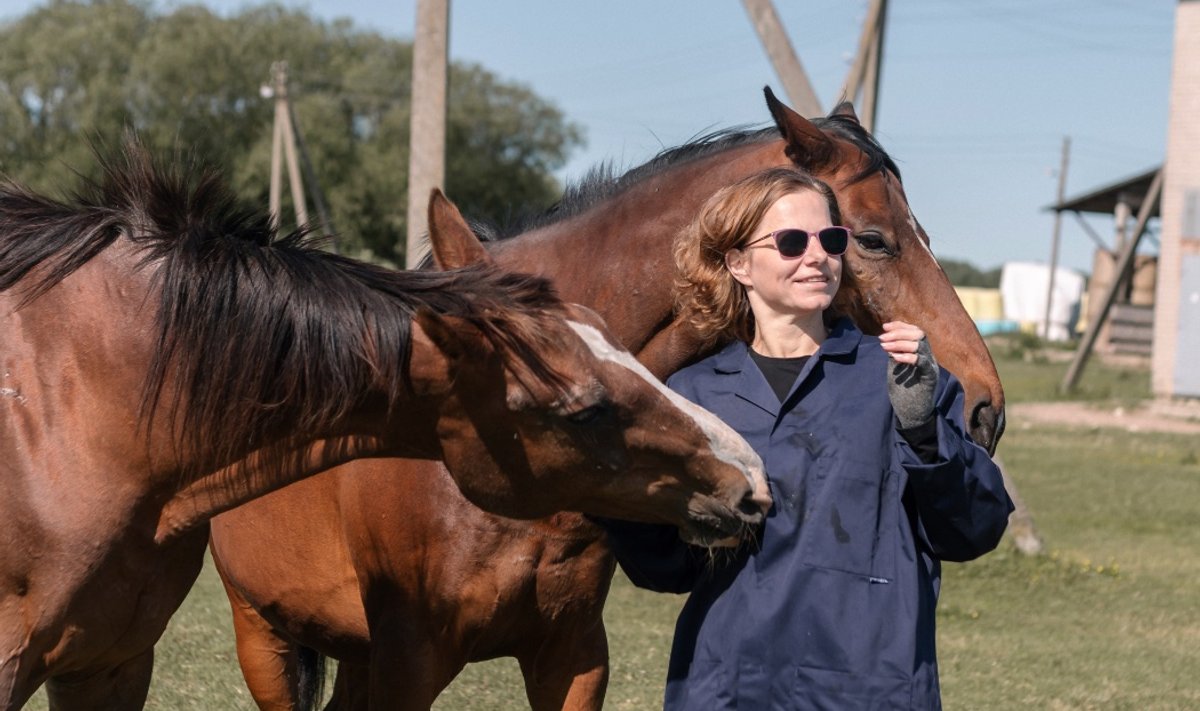
“Studying at LSMU helped me clearly understand that every difficulty is temporary: a major upswing may often be followed by an equally significant downturn. That is a normal part of economic development,” says researcher, lecturer and farmer Kristina de Vitte.
Every day, Dr de Vitte teaches agronomy and animal nutrition to students in English at the Lithuanian University of Health Sciences (LSMU) and then returns to her family farm in the Kėdainiai region.
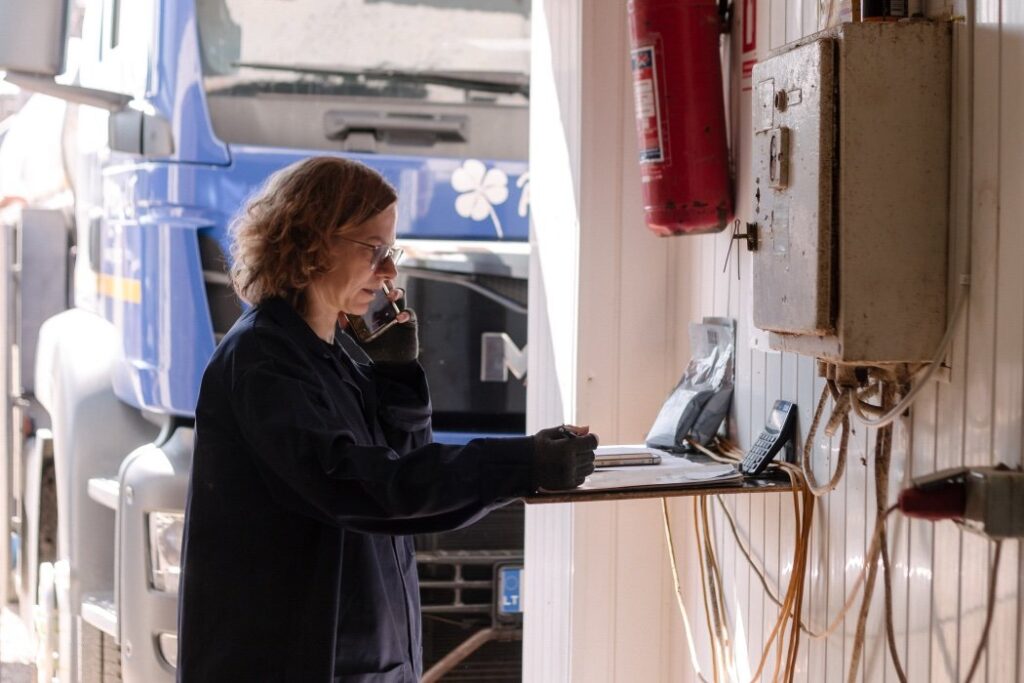
The agricultural enterprise and livestock herd acquired by the family two decades ago have since been renewed and expanded by almost a third. The farm is guided not only by years of practical experience, but also by the comprehensive knowledge gained at LSMU – knowledge that has enabled Dr de Vitte to build the career she wanted, both as a researcher and as a farmer.
Today, a large part of Dr de Vitte’s family is connected with studies at LSMU: three of her children are currently studying at the University. One is training to become a veterinary doctor, another is planning to continue with a Master’s degree in Animal Science, and her youngest daughter recently began studying Food Science.
Dr de Vitte has no doubt that their choices were influenced by life and work on the farm, as well as by her own scientific career, through which the University also became familiar and close to her children.
Asked whether she helps her children with their studies, Dr de Vitte says there is simply no need: as diligent students, they are already making a strong contribution to the success of the farm through their knowledge and skills. Both older children also see their professional future in farming.
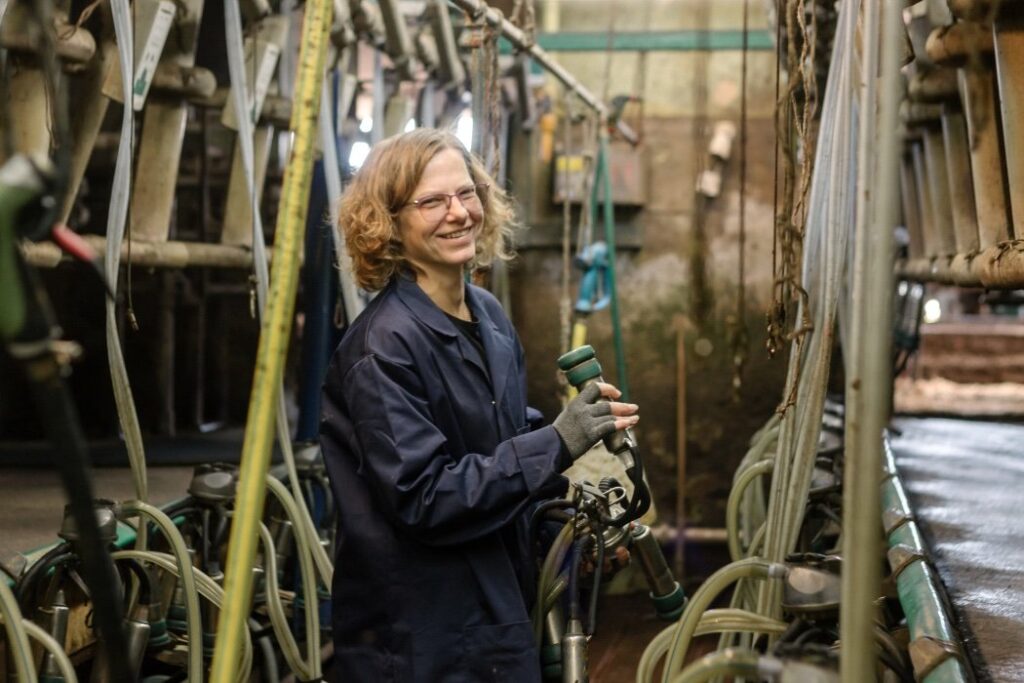
Reflecting on the beginning of her own career, Dr de Vitte smiles: her first studies had nothing to do with agriculture. “When I was studying interior design, I was convinced that I would never grow anything in my life – not even a single flower on a balcony,” sako dr. K. de Vitte.
Everything changed after her experience in Denmark. Having gone there to work, she found a position in an agricultural company. She enjoyed the work and did well, so she decided to change the direction of her studies.
Growing farm and career after the studies
The family’s dairy farm, with its herd of milking cows, required specific expertise. Dr de Vitte gained this knowledge through Animal Science studies at LSMU. This study programme is offered only at LSMU and provides broad, versatile knowledge of farm animals, their selection, breeding, care, nutrition and the management of a modern farm.
“I really enjoyed my studies. They gave me a strong theoretical and practical foundation, and we explored all areas of farming – from livestock and poultry farming to breeding and statistics. I also consider my six-month Erasmus exchange placement in Germany a great success. I chose subjects that were both relevant and interesting to me: economics, animal breeding and agricultural modelling.
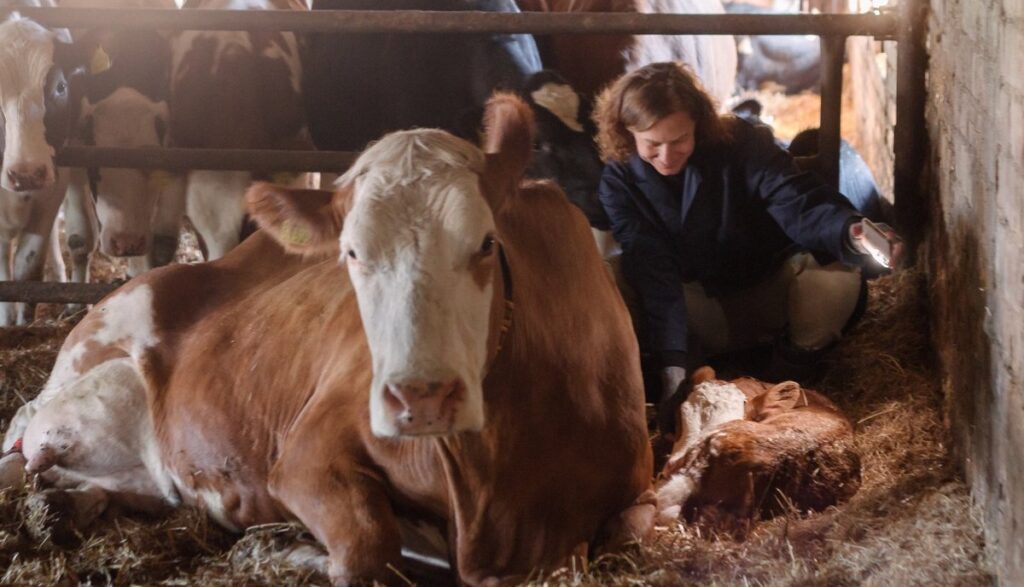
Today, this knowledge helps me make solid decisions on my farm, address various economic issues and deal with the many situations that arise in these challenging times,” says Dr de Vitte.
Farmers, of course, face surprises and changes brought about by both climate conditions and various political decisions. According to Dr de Vitte, the education she received helps her view situations more broadly and understand that difficulties are temporary, can be overcome, and require preparation.
“It also helps us calculate our own finances more accurately, plan cash flows and make more rational decisions when selecting the breeds of animals we keep. After my studies, we decided to change the direction of the farm in order to reduce economic risks, and we now raise dual purpose cattle. So, if things are not going well with milk, we sell meat. We also chose to grow somewhat different agricultural crops, so knowledge of agronomy has proved very useful too,” she explains.
After completing her studies, Dr de Vitte’s continued growing in terms of her career. She not only manages the business, but also conducts scientific research, defended her doctoral dissertation, delivers lectures in English and holds laboratory classes for international students at LSMU.
She enjoys sharing her experience and ideas with young people, while they, in turn, share their sincerity and openness with her – sometimes returning after six months or a year simply to have a chat over a cup of coffee.
It takes more than knowledge
Having grown up in the countryside herself, the researcher and entrepreneur has seen how dramatically rural life and farming have changed. There is increasingly less of the stereotypical image of manual labour “in a cowshed with a pitchfork”, and far more modern machinery, tractors and robots.
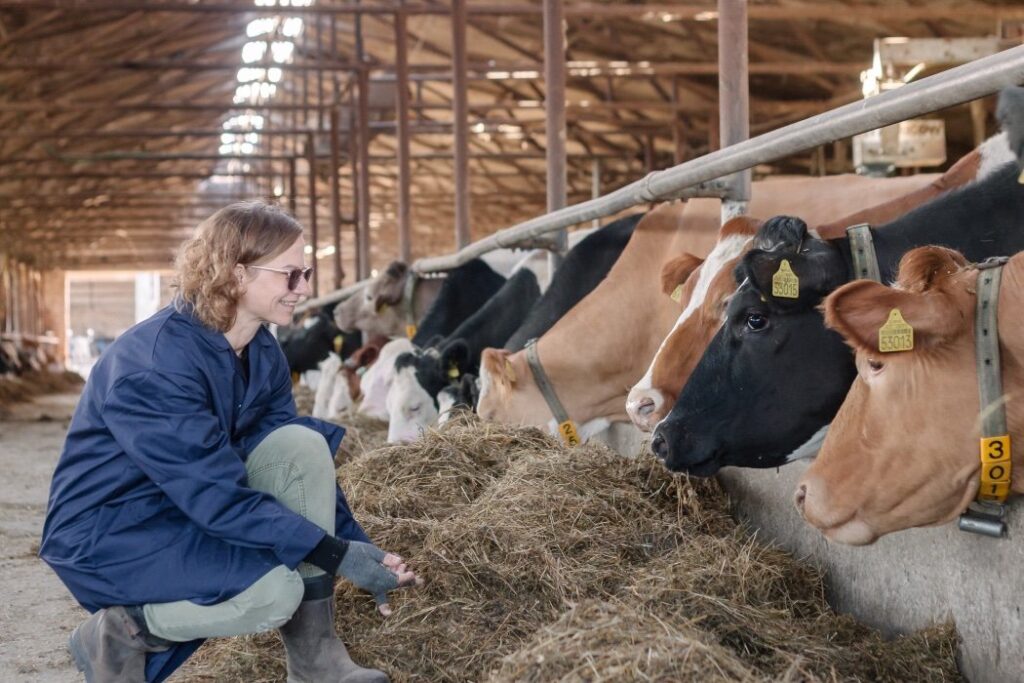
Yet some things remain unchanged: without love for animals and love for people, progress is impossible.
“Working with animals is never just about working with animals. It is also about interacting with people, because wherever there is livestock, people are needed too. You cannot do everything alone – a team is needed everywhere. It is important to understand not only how to operate a robot, but also how to lead people. It is multifaceted work that requires both practical and theoretical knowledge,” K. de Vitte emphasises.
National efforts to encourage young people to choose a future in agriculture
The family’s agricultural enterprise manages to operate by relying on own resources. However, speaking to representatives of other farms, Dr de Vitte sees the actual demand for qualified specialists in agriculture, and how highly sought-after Animal Science graduates trained at LSMU are.
A number of agricultural companies are already offering scholarships to students entering agricultural study programmes, and are prepared to provide both employment and accommodation after graduation. Students are also additionally encouraged by the Ministry of Agriculture: those admitted to state-funded Animal Science studies at LSMU may receive a monthly scholarship of EUR 200 throughout the entire period of their studies.
First-cycle Animal Science studies at LSMU last 3 years (or 4 years in the part-time study mode).
The study programmes offered by the Faculty of Animal Sciences at LSMU provide both universal and specific, science-based knowledge and skills – whether in raising and breeding farm animals or preparing animals for assisted therapy, service or leisure.
Many students at the Faculty begin working as early as their first or second year of studies, which reflects the strong demand for highly qualified Animal Science specialists.
More information: https://lsmu.lt/en/admission/master-studies/animal-science/
BackRecent articles